Tools / Analysis
Runway Continuum: what happens when the frame becomes an interface
Resize the window and the scene changes with it. Runway’s early Continuum demo puts the viewer inside the image-making process. For a director, the question is what must survive that interaction.


Drag the edge of a window. In Runway’s Continuum demonstration, the scene inside changes. That small gesture raises a large creative question: if the viewer can alter the image, which decisions still belong to the director?
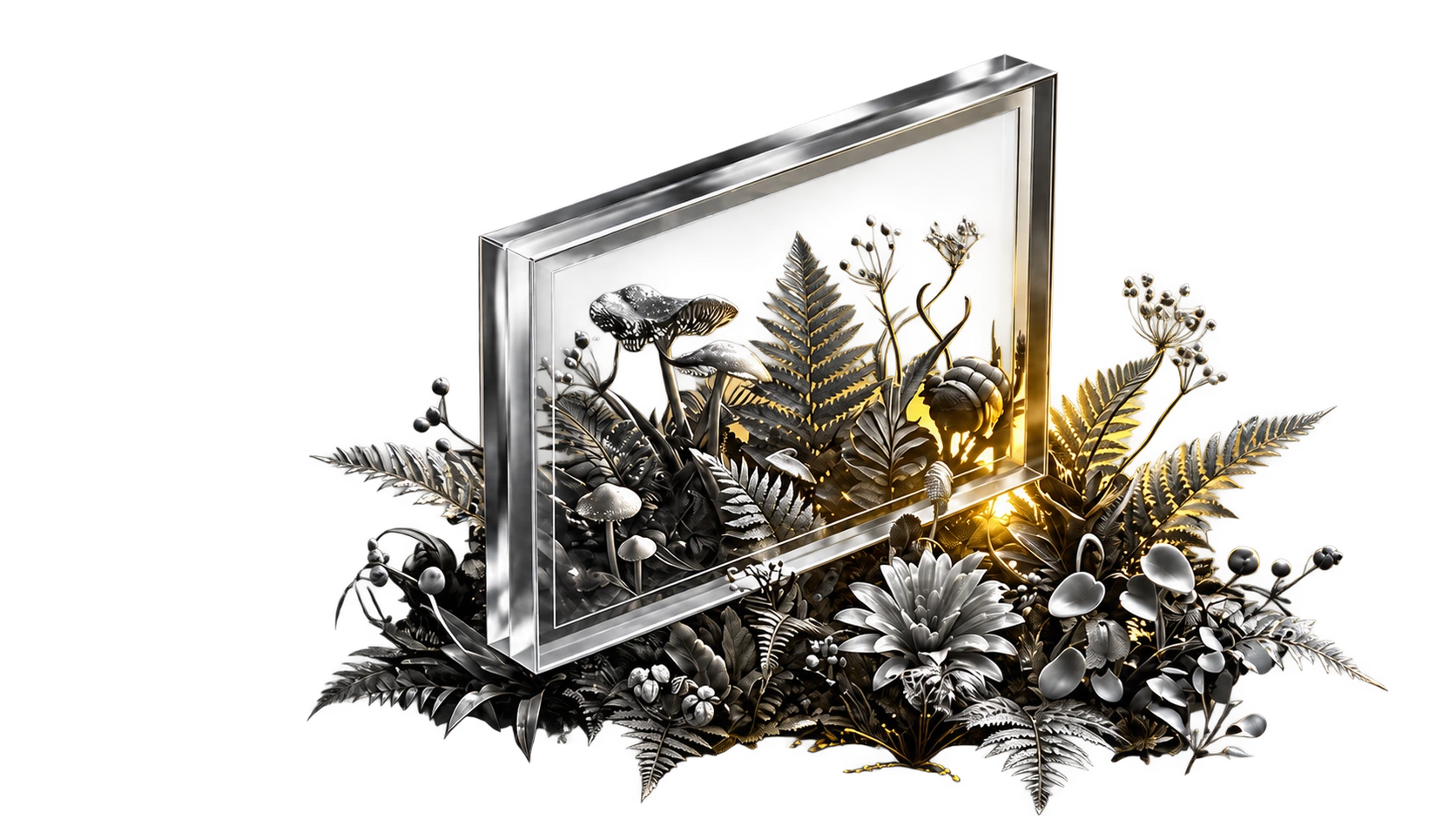
One example in the demo explores plant biology. Its visual window responds to resizing: the dimensions become an input that changes the scene. For a filmmaker, that makes the viewer’s gesture part of the brief. A wider view can reveal a relationship; a tighter view can hide the detail that explained it. The creative problem is deciding which information can change and which information carries the story.
An early look at a different kind of window
Runway Labs introduced Continuum on 1 October as a research application. The 5:21 demonstration presents Portals, Visual Thinking, Responsive Video Interfaces and Interactive Worlds, including an agent and responsive visual windows. No price, public launch date or access terms are given.
In Visual Thinking, an agent works through a bicycle-mount idea for 3D printing with visual material. Elsewhere, a generated portal has soft, dreamlike edges that distinguish it from the surrounding desktop. These are concrete design choices: imagery becomes something to think with, and its appearance signals that it can change. I would judge the workflow by whether a useful visual can be revised and deliberately reached again.
Sources: Runway / Runway Labs [1]
Project Continuum — the official demonstration
Demonstration by Runway Labs, published by Runway on 1 October 2026. Watch the publisher’s original player; if it is unavailable in your browser, use Open original above.
Continuum has a research history
Runway introduced Solaris on 31 August as an Interface World Model. Its published limitations include text stability, factual grounding, long-session coherence and accessibility. Those disclosures concern Solaris; they are context for evaluating Continuum, not separate measurements of this application.
Continuum brings that research into a recognisable working environment. For someone making images, the next useful evidence would show what happens after the first impressive result: can you preserve a choice, correct one detail and continue from there? That would connect the demonstration to the decisions a production actually needs.
Sources: Runway [2]
Choose what the viewer is allowed to change
Consider a scene with a person looking towards a closed door. This is a hypothetical directing brief, not a Continuum example. The door matters because the look gives it a purpose. If a resize moves it elsewhere or changes the figure’s attention, the story changes, even if the new composition is beautiful.
I would specify five things before allowing the scene to respond: the figure’s position, direction of gaze, relative scale, light direction and the key object. Some can change; others carry the meaning. The brief should state the reason for each constraint, so a revision can be judged against an intention.
I would also agree on the freedom around those anchors. Widening the view might reveal the hallway beyond the door; narrowing it might remove that context. Neither should quietly move the door to the opposite side. In this hypothetical brief, the viewer can explore the room while the person’s expectation stays legible. If the interaction hides the important prop, there should be a deliberate alternative cue, rather than an accidental disappearance. This is the level at which I would want control.
For previs, that could become a way to explore the consequences of reframing. For a brand experience, it could let the visitor move while a product remains the visual anchor. Both are possible future uses, conditional on control and reliability. I would not offer either to a client as a demonstrated Continuum workflow.
Can you return to the frame you chose?
My first production question would be whether a chosen state can be saved and restored. Then: does the same action lead to the same result? Can two collaborators review the same scene? Is there an export that preserves the agreed image? These remain questions, not features established by the announcement.
A director needs room to discover something unexpected and a dependable way to keep it. Otherwise, the attractive frame becomes difficult to discuss: a note refers to an image that may no longer exist. Approval, revision and delivery all depend on being able to identify what was actually chosen.
The test I would run when access is available
I would begin with one simple scene and record its starting state. The following is a proposed test, not an experiment we have conducted. Its purpose is to distinguish a striking response from a response that remains useful after repeated changes.
- Resize repeatedly: check object identity, the important prop and any readable text after each change.
- Extend the session: record when lighting, spatial relationships or meaning begin to drift.
- Repeat the same actions from the same saved state, if saving is supported; compare outcomes.
- Check keyboard operation, focus and assistive-technology support. Important controls must remain usable.
SOURCES & METHOD
The record behind the article
Checked 2 October 2026 against Runway’s original announcement and transcript, and its Solaris research article. The official LinkedIn embed was checked for playback without signing in. Production scenarios, questions and the test sequence are editorial proposals. We have not tested Continuum or measured its reliability. The cover is a conceptual illustration created with Flow and refined with ChatGPT; it depicts no released Runway interface.
- Introducing Project Continuum by Runway Labs — original video announcement ↗Runway / Runway Labs · 1 October 2026
- Introducing Solaris ↗Runway · 31 August 2026