Tools / Analysis
Gemini 4 Argon: same frames, faster decoder
Google’s new model has an unusually concrete connection to filmmaking: improving the software that plays video. The decoder example, the mixed comparison with Claude and OpenAI, and who can actually use Argon now.

 Argon
Argon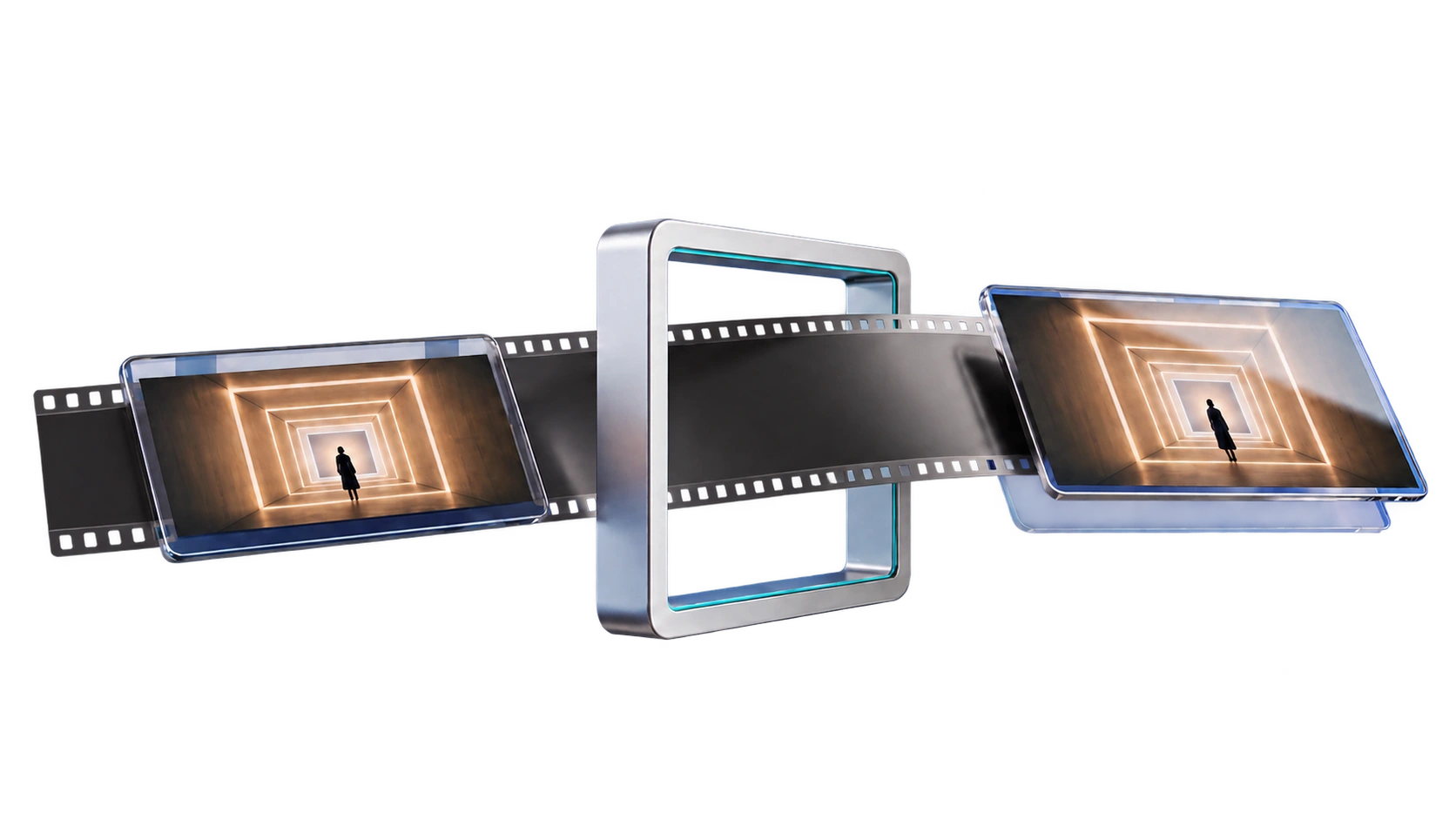
A beautiful generated shot is easy to notice. The machinery that lets you watch it usually disappears. That machinery is where I found the most interesting video story in Google’s 30 September announcement of Gemini 4 Argon.
The useful question is specific: can an AI agent improve a working video system while preserving its output? That asks for engineering evidence, not just a persuasive demo. It also gives this release a real connection to production, beyond the familiar promise that a smarter model will somehow make better films.
What the 2.7× decoder result actually means
Google reports that Argon agents optimized an existing Rust port of libgav1: replacing 32K lines of SIMD code with safe, auto-vectorized Rust. The result was 2.7× faster than that Rust port, with identical video output, moving closer to the optimized C++ implementation.
libgav1 is an AV1 decoder. Decoding reconstructs the pictures in an existing compressed video. Generating a video creates a new sequence. The distinction matters: this example does not establish faster AI video generation, a better-looking film or an immediate speed boost in your editing app. It is a reported improvement to a particular piece of software, against a particular baseline.
For me, preserving the picture is the important part. In a production tool, a faster result loses its value if it quietly changes a frame. A convincing follow-up would publish the change, the test clips, the machine used and the timing procedure. That would let others check both speed and correctness. We have the company’s account here; I have not reproduced its measurements.
Sources: Google [1] · Google / Chromium [6]
Google’s Gemini 4 Argon launch artwork
Original publisher artwork, reproduced unchanged. This is release branding, not a screenshot of the decoder experiment.
Understanding a film is another task
Google’s evaluation table gives Argon 91.7% on LVBench, a long-video understanding benchmark. That result concerns interpreting video; it does not rate the beauty of generated shots or a model’s taste as an editor.
The methodology also matters: Google sampled video at one frame per second for Gemini, while the other models used capped frame counts because of API limits. The comparison therefore includes differences in what each model received. I would not treat it as a controlled test with identical video input.
A practical test for a filmmaker would be to give the model a finished sequence and ask it to locate a recurring action, identify the supporting timecodes and explain an uncertain match. I would include a repeated scene, an off-screen sound and a detail partly hidden by the cut. Those are proposed checks, not things I have tested with Argon. A useful assistant needs to show where its observation comes from so the editor can verify it.
Sources: Google DeepMind [2] · Google DeepMind [3]
Against Claude and OpenAI, the answer changes by task
Google’s own table contains the reason to resist a universal winner. Argon leads the selected models on DeepSWE v1.1; Astra leads FrontierSWE v2, and Opus 5.5 leads Terminal-bench 4.0. These are different evaluations, not interchangeable percentages.
The evaluation PDF separates Google’s own Argon runs from comparator results taken from public leaderboards or model providers. It is a compilation with documented settings, rather than a fresh side-by-side experiment run by this publication. That qualification belongs beside the numbers.
Vals AI’s live table, checked on 1 October, separately lists Argon at 68.90%, Sonnet 5.5 at 67.04% and Opus 5.5 at 66.97%. Its index combines finance, coding, legal and tax work using economic weights. It is relevant to knowledge-work automation; it is not a score for directing, design taste or filmmaking. The page’s explanatory prose still describes the earlier Claude-led ranking, so the current table and its date are the evidence used here.
For a team building a media tool, the comparison I would pay attention to is a complete task: correct output, failures, elapsed time, human review and total cost. The strongest model on one leaderboard can still be the wrong choice if it needs too much supervision for the work you actually do.
Sources: Google DeepMind [2] · Vals AI [5] · Google DeepMind [3]
| Evaluation | Argon | GPT-6 Astra | Opus 5.5 |
|---|---|---|---|
| DeepSWE v1.1 | 77.9% | 74.1% | 74.2% |
| FrontierSWE v2 | 55.0% | 65.5% | 62.3% |
| Terminal-bench 4.0 | 57.4% | 58.2% | 66.4% |
The complete launch comparison published by Google
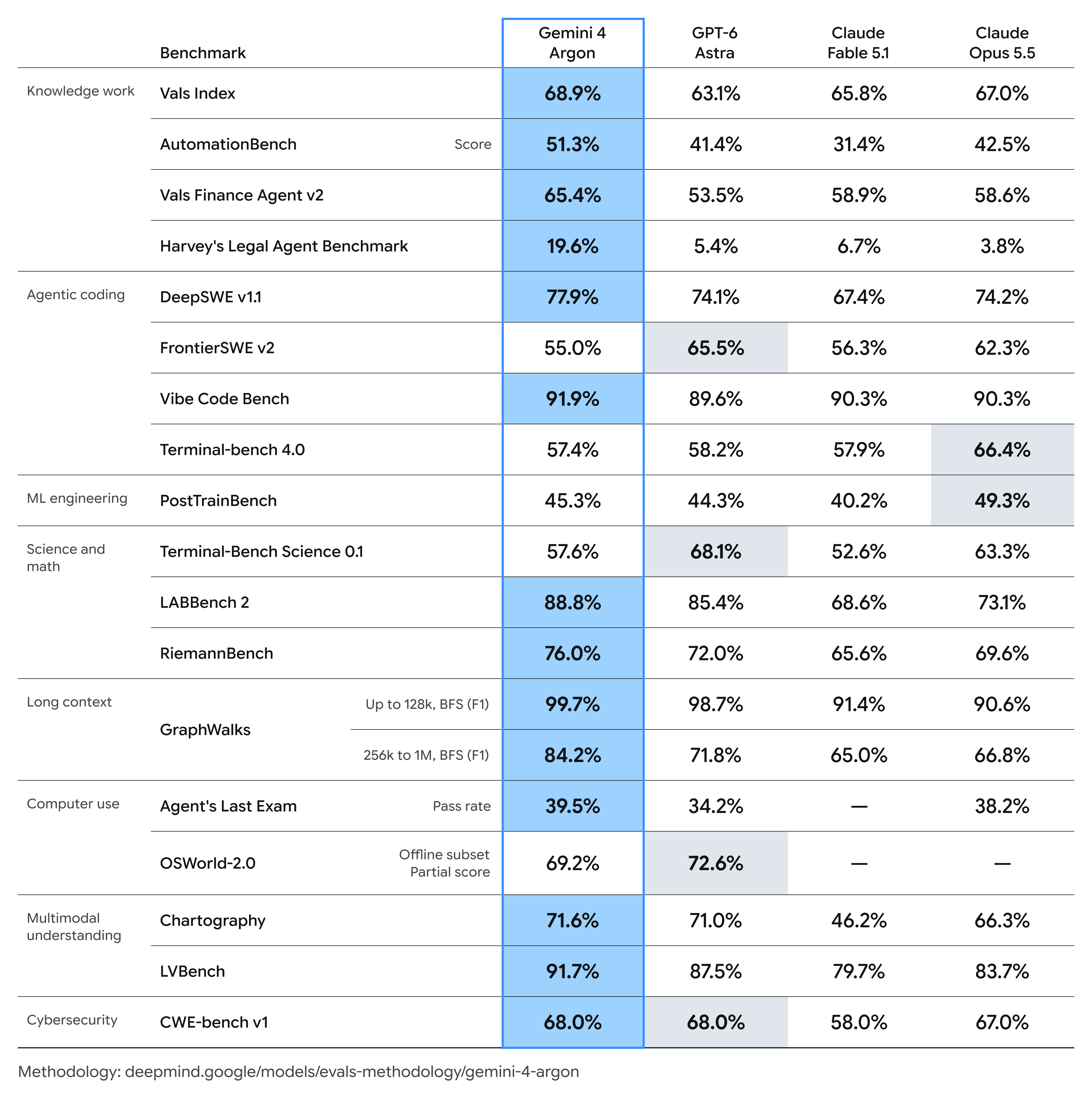
Original chart, reproduced unchanged. Results and evaluation settings are the publisher’s. The compact table above highlights three different outcomes; use the linked source for the full table and methodology.
Announced does not mean available to everyone
Current access is through a selected group of trusted defenders in Fairwind. The programme vets organizations and restricts use to authorized defensive and research work. It is not a consumer early-access queue.
Google plans broader access starting with paid API customers and Google AI Ultra subscribers. A public release date is not specified. Buying Ultra today should not be read as confirmation that Argon is already enabled in your account.
The launch price is temporary: Google’s footnote sets the subsequent rate at $4 input / $20 output per million tokens. It does not give the introductory period’s length. Those are API rates, not a subscription price or a promise of an Ultra usage allowance.
Sources: Google DeepMind [4] · Google [1]
| Item | Status |
|---|---|
| Access now | Selected Fairwind partners |
| Broader launch | Planned; no public date |
| Introductory API input / output | $2 / $10 per million tokens |
| Cached input | 95% discount on input pricing |
| Output limit | 1 million tokens; an output limit |
What would make this release matter in practice
The million-token output figure describes how much a model can produce; it is not the size of an input context window. A higher ceiling also does not tell us how much work a typical request will require. Long runs should be judged by the result and the resources needed to reach it. A shorter correct run can be more useful than a spectacularly long one.
When broader access arrives, I would start with one troublesome component from a real workflow, keep a baseline and ask for a reviewable change. For a video system, that means checking the reconstructed frames as well as speed. For a production assistant, it means checking the evidence behind each timecode. Those tests are less glamorous than a launch montage, but they tell you whether the tool deserves a place in the work.
The decoder example earns my attention because it gives that evaluation a concrete starting point: the film stays the same, and the system behind it improves. That is a claim worth following through to reproducible code and broader access.
SOURCES & METHOD
The record behind the article
Checked 1 October 2026 against Google’s original announcement, the Google DeepMind model and Fairwind pages, and the Vals AI leaderboard. Original Google artwork and the evaluation chart were inspected and are credited. No hands-on Argon trial or decoder timing test was conducted for this article. Proposed workflow checks and judgments are editorial analysis. This is a release report, not a claim of general availability or a ranking of social-media popularity.
- Gemini 4 Argon: our next era of frontier intelligence ↗Google · 30 Sep 2026
- Gemini 4 Argon — capabilities and evaluation table ↗Google DeepMind
- Gemini 4 Argon evaluation methodology ↗Google DeepMind
- Fairwind Program — access, governance and FAQ ↗Google DeepMind
- Vals Index v2.1 — live leaderboard and methodology ↗Vals AI · Checked 1 Oct 2026
- libgav1 — AV1 decoder source and documentation ↗Google / Chromium