Tools / Analysis
GPT‑6: three models, one creative brief.
What Astra, Sol and Luna are for, how their API prices compare with Opus 5.5, and which model to trial for your creative workflow.

 Astra · Sol · Luna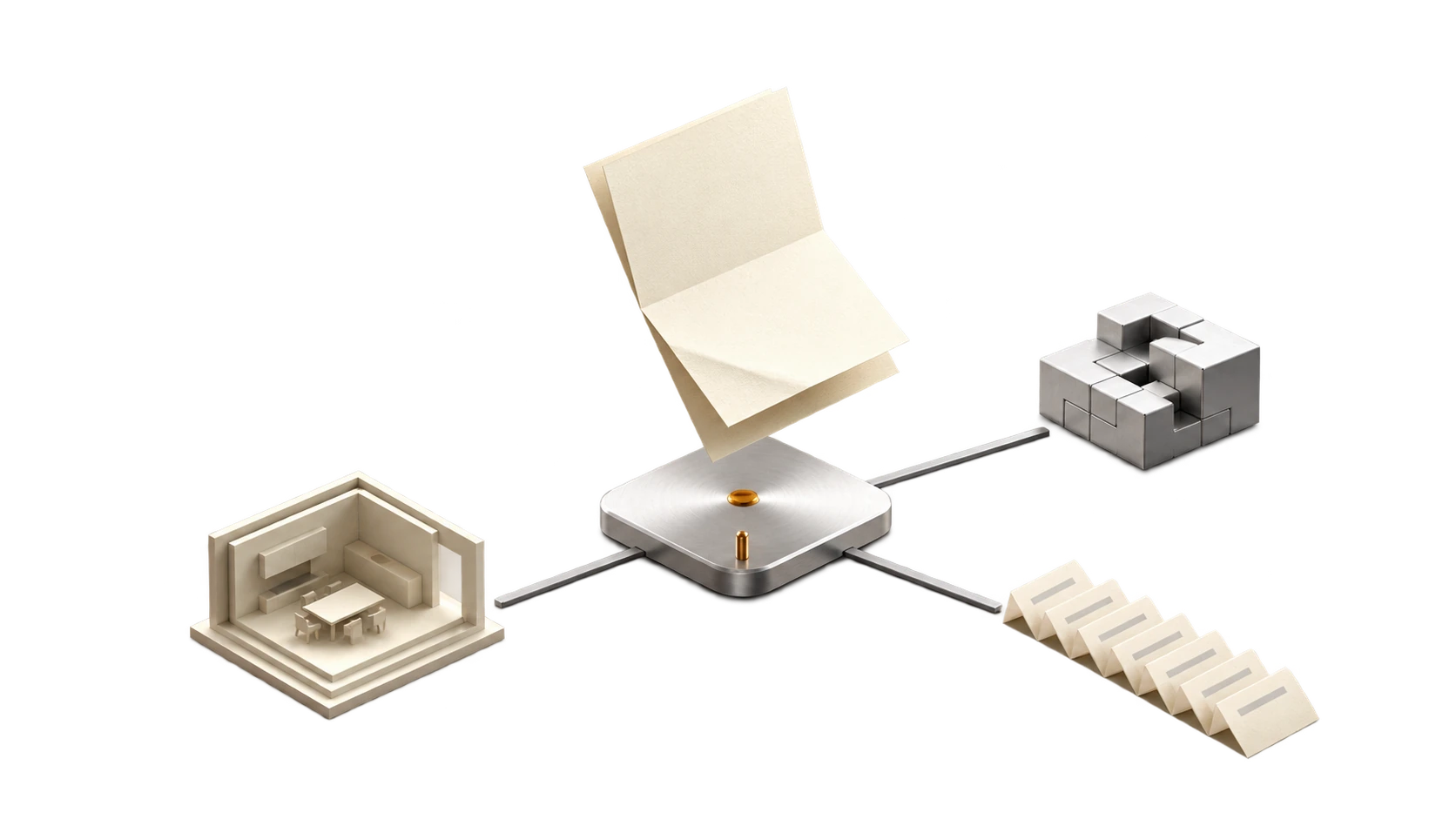
The useful question about GPT‑6 is how much reasoning a particular job deserves. A difficult scene breakdown, a production utility and a batch of captions have different failure costs. Astra, Sol and Luna make that choice explicit. Comparing them with Claude starts with the assignment, not the logo.
Astra, Sol and Luna: the documented roles
OpenAI positions Astra for its hardest end-to-end work, Sol for complex coding and agent workflows, and Luna for focused tasks at volume. These are model choices. ChatGPT and Codex are products that give models tools and a working environment; product access and usage limits should be checked separately from API pricing.
My suggested starting allocation is Astra for an ambiguous assignment that crosses several applications, Sol for implementing a well-defined production tool, and Luna for repeatable text or data preparation with clear checks. These are editorial starting points, not measured guarantees. Escalate when the cheaper option fails the task’s acceptance criteria.
Sources: OpenAI Developers [1] · OpenAI Developers [2] · OpenAI Developers [3]
What changes while the work is in progress
GPT‑6’s API guidance describes asynchronous tool calls, steering while a task is underway and changes to reasoning effort during a conversation. The practical possibility is a workflow that can absorb a correction while independent work continues. Applications still have to implement the tools and manage their results.
For a director, imagine correcting a scene’s location while a reference search continues. The useful behaviour would be to keep completed research, update the affected shots and make the changed assumption visible. That is the workflow to evaluate. A product announcement cannot tell you whether your own files and software will behave that way.
Sources: OpenAI Developers [4]
Astra in a creative application
The architectural example below comes from Thomas Ricouard’s OpenAI Developers case study. It shows a rendered tour from a Blender workflow. What I would inspect is whether the scene remains editable after feedback: the same camera, the same material assignment, the same object identities. A beautiful export becomes more valuable when the next note can be applied cleanly.
Do not read this clip as evidence that GPT‑6 directly emits video. The model documentation lists text output and image input; creative outputs can be produced through connected software and generation tools. The surrounding workflow is part of the capability you are evaluating.
Sources: Thomas Ricouard / OpenAI Developers [5] · OpenAI Developers [1]
Atelier house — rendered camera tour
Publisher’s demonstration of an Astra-assisted Blender scene. This is a rendered tour, not video generated directly by the language model.
Published API prices, side by side
The table shows standard USD rates per one million tokens, checked on 27 September. It excludes cache writes, tools, premium processing, tax and subscription plans. For GPT‑6 requests above 272K input tokens, the documented rates increase for the full request: input and cache rates double, output rises to 1.5 times the base rate.
Sources: OpenAI Developers [1] · OpenAI Developers [2] · OpenAI Developers [3] · Claude Platform Docs [6]
| Model | Input | Cached input | Output |
|---|---|---|---|
| GPT‑6 Astra | $10 | $1 | $50 |
| GPT‑6 Sol | $2 | $0.20 | $10 |
| GPT‑6 Luna | $0.10 | $0.01 | $0.50 |
| Claude Opus 5.5 | $4 | $0.20 | $20 |
GPT‑6 or Opus 5.5: which would I try first?
There is no controlled head-to-head studio test behind this article. Anthropic’s launch comparison also changes ordering across tasks. It cannot establish which model has better cinematic taste or which will finish your project with fewer corrections. A benchmark, a selected creator demo and a personal production test answer different questions.
Sources: Anthropic [7]
| Your task | Start with | Decide by |
|---|---|---|
| Complex work across creative apps | Astra, then Opus 5.5 on the same brief | Accepted editable files and review time |
| A focused custom production tool | Sol; compare Opus if revisions are costly | Correct behaviour after a change request |
| Many small, checkable tasks | Luna with spot checks | Error rate and cost of repair |
| Treatment and document revisions | Opus 5.5 and Sol on matched inputs | Meaning, consistency and usable formatting |
Watch a creator’s comparison, then run your own
Nate Herk’s video compares Opus 5.5 and Astra on twelve practical tasks. It is included as a creator-led demonstration, with the original title and attribution. Its selection of tasks and working environment are not your studio’s. Use it to find an experiment worth repeating, not as proof of a universal winner.
Keep the input assets, time budget and requested output identical. Count failed attempts and human fixes as part of the bill. For recurring work, choose the least expensive setup that reliably meets your standard. For a consequential one-off, pay for the stronger option when it demonstrably saves an expensive correction.
I Tested Opus 5.5 vs. GPT‑6 Astra on 12 Real Use Cases
Creator comparison. The video’s conclusions belong to its author; Signals has not independently reproduced the twelve tasks.
SOURCES & METHOD
The record behind the article
Checked 27 September 2026. Technical claims are grounded in developer documentation; videos are credited to their creators. Recommendations and proposed tests are editorial analysis. No original comparative testing of these releases was conducted for this article.
- GPT‑6 Astra model specifications and pricing ↗OpenAI Developers
- GPT‑6 Sol model specifications and pricing ↗OpenAI Developers
- GPT‑6 Luna model specifications and pricing ↗OpenAI Developers
- GPT‑6 model guidance ↗OpenAI Developers
- Architectural visualization with Astra ↗Thomas Ricouard / OpenAI Developers · 2026-09-04
- What’s new in Claude Opus 5.5 ↗Claude Platform Docs
- Opus 5.5 launch comparison and evaluation notes ↗Anthropic · 2026-09-22