The director’s view
After the demo, someone still has to direct.
Opus 5.5, GPT‑6 and AI video inside the edit. A director’s guide to the shift from impressive outputs to work you can actually revise.
 SignalsDmytro Uhnivenko
The first impressive AI image asks for admiration. The second version asks for direction. Keep the actor’s hesitation. Move the light. Hold the cut two beats longer. Change the room without changing the reason we are looking at it. That is where an attractive demonstration starts to become a production process.
This September’s releases are interesting through that lens. Language models are working across creative software; video tools are moving closer to the timeline; creators are publishing experiments that are useful to inspect. This is a selection of developments with production consequences, checked on 27 September—not a measured ranking of everything trending on X.
Three signals worth following
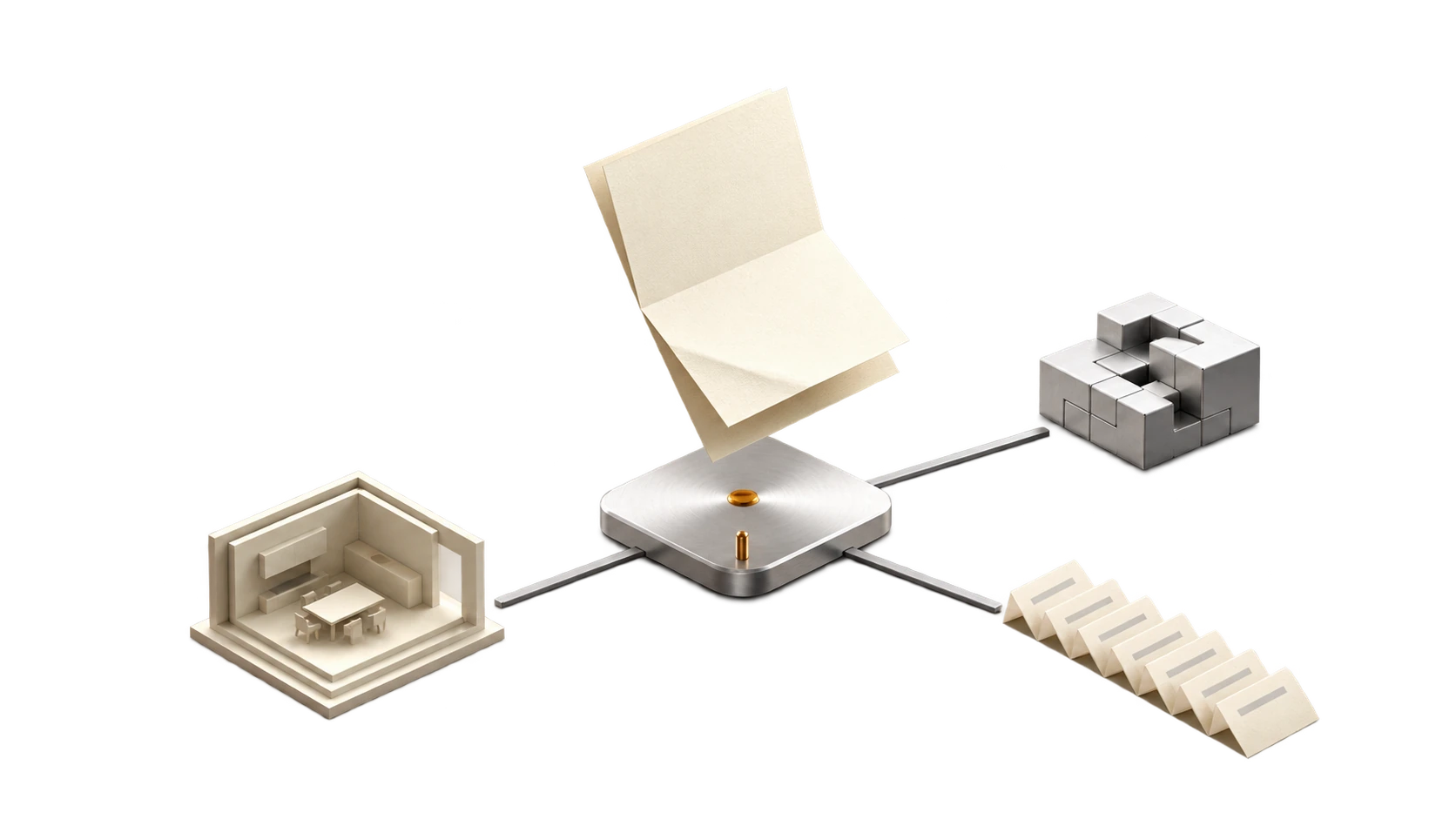
Anthropic released Opus 5.5 on 22 September. OpenAI’s current GPT‑6 family includes Astra, Sol and Luna. Runway’s 23 September changelog adds a DaVinci Resolve plugin. These are different kinds of news: a model release, a choice of model tiers and an integration with an editing environment.
My reading is that the interesting competition is moving toward the chain between an instruction and an accepted result. Can the system find the right asset, understand a note, make a bounded change and give the editor something usable? A higher benchmark score helps only when it improves one of those steps. A shorter path through the software can matter just as much.
Sources: Anthropic [1] · OpenAI Developers [2] · Runway [3]
Look at what the demonstration actually contains
Thomas Ricouard’s architectural case study for OpenAI shows Astra-assisted work in Blender, including a rendered house tour. Its relevance to cinema is the editable scene behind the image: geometry, materials, cameras and light. The language model helps operate a process; the renderer produces the frames.
That distinction changes the questions worth asking. If a room feels too symmetrical, can you move a wall? If the composition becomes weak in motion, can you adjust the camera path? If the surface looks expensive but wrong for the story, can you change its roughness without rebuilding the world? Those are directing questions with inspectable answers.
Sources: Thomas Ricouard / OpenAI Developers [4]
Atelier house — rendered camera tour
Publisher’s demonstration of an Astra-assisted Blender scene. This is a rendered tour, not video generated directly by the language model.
A tool can itself be a creative work
Ryan Sael’s interactive lens lab is another useful example to open. It turns an optical idea into something a viewer can manipulate. It is credited to its creator and linked below; its appearance in Claude’s selected examples is evidence of a published experiment, not a guarantee that anyone will reproduce it in one prompt.
For a filmmaker, a small simulation can make a treatment more precise. Instead of three paragraphs explaining a focus transition, show what the audience is meant to notice. The value is the explanation and the choice it supports. Visual polish alone cannot establish whether an optical simulation is physically accurate, so its educational claims still deserve scrutiny.
Sources: Ryan Sael [5] · Claude / Thread Reader [6]
The Plane of Focus — an interactive lens lab
The creator’s original post and demonstration on X.
Creator-published example, also highlighted by Claude. A selected demo, not a controlled benchmark. Open the original post for the creator’s process.
Revision is a more revealing test than generation
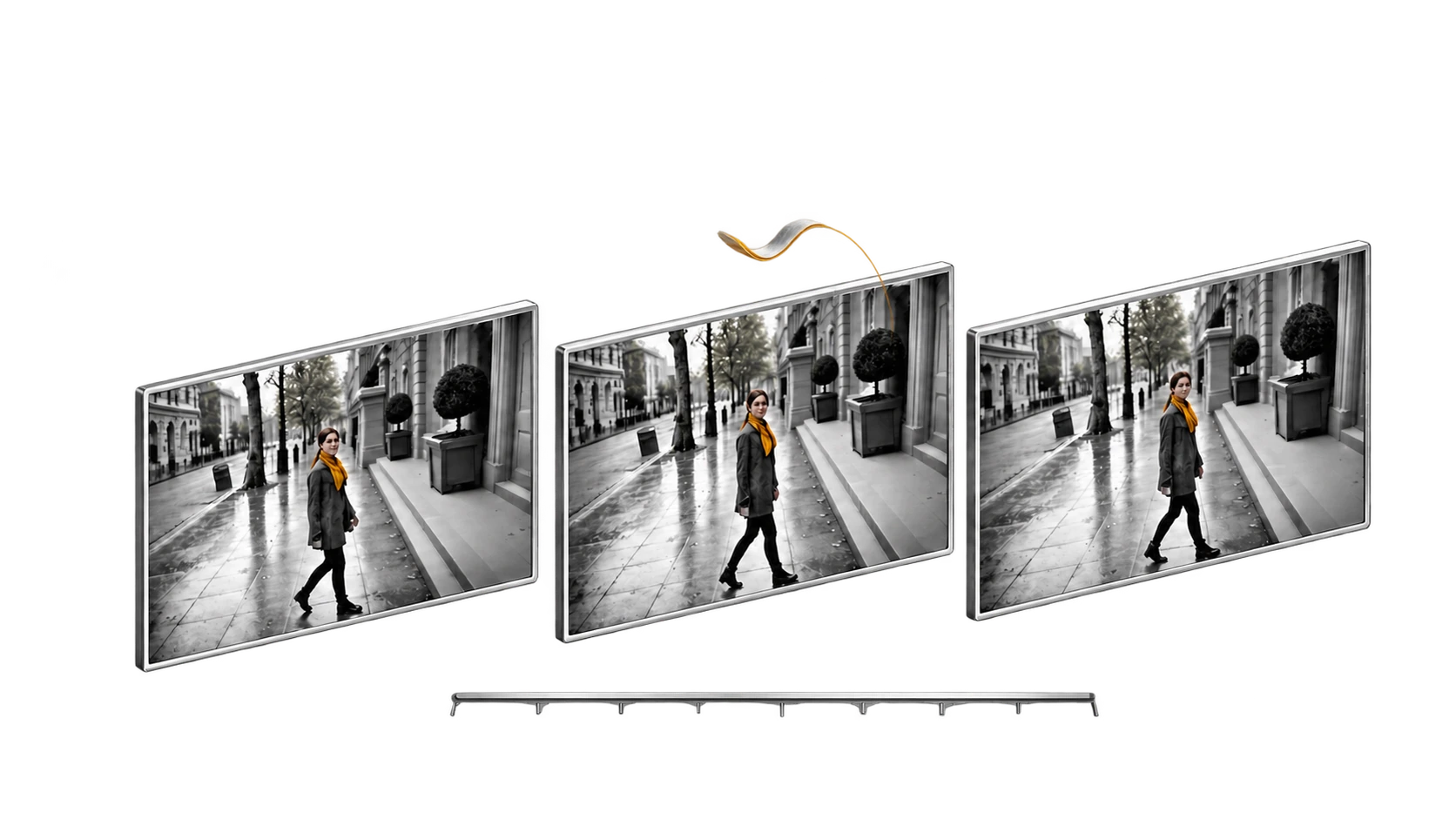
Runway describes Aleph 2.0 as a way to carry a change from an edited frame through a video. Treat the official demonstration below as a starting point for inspection. Watch the unedited areas as closely as the intended change: they are where a convincing edit often reveals its cost.
A good revision preserves decisions that have already been made. Imagine a jacket colour change that also alters the actor’s shoulder, the room’s reflection or the timing of a glance. The requested change may be successful in isolation while the shot becomes unusable in the sequence. Evaluation has to happen at normal playback speed and across the neighbouring cuts.
Sources: Runway [7]
Introducing Aleph 2.0
Official product demonstration. Watch what changes across the cut and what remains stable. Selected examples do not establish a success rate.
Brief the next decision
A useful creative brief gives the model a hierarchy. Start with the dramatic fact: someone wants something and something prevents it. Then name the decisions already locked—screen direction, character identity, lens intention, light source and ending. Only then ask for the change. A pile of cinematic adjectives cannot do the same job.
For a first studio experiment, I would use one ten-second scene and one revision. The scene might contain a character reaching for a letter and deciding to leave it unopened. Ask for a colder room while preserving the hand action, camera timing and final hesitation. This is a proposed evaluation, not a test I have run on these releases.
- Before: save the approved shot, the brief and the exact revision note.
- During: record attempts, waiting time, model settings and every manual repair.
- After: compare performance, continuity, cut timing and delivered file quality.
The useful unit of progress is a creative decision that survives the next revision.
Build a process that keeps your taste visible
The risk of an abundant toolset is losing the reason for choosing anything. When ten variations arrive quickly, it becomes tempting to pick the most elaborate. A quieter frame may serve the scene better. Keep a short decision log: what the audience should feel, what changed, what was rejected and why. That record gives the next person—or the next agent—something more useful than a folder of pretty outputs.
These releases make a strong case for trying smaller, more deliberate production experiments. They do not settle authorship, taste or storytelling. Those become visible in what you ask the system to preserve, the point at which you stop generating and the image you finally allow to remain.
SOURCES & METHOD
The record behind the article
Checked 27 September 2026. Technical claims are grounded in developer documentation; videos are credited to their creators. Recommendations and proposed tests are editorial analysis. No original comparative testing of these releases was conducted for this article.
- Introducing Claude Opus 5.5 ↗Anthropic · 2026-09-22
- GPT‑6 model guidance ↗OpenAI Developers
- Product changelog ↗Runway · 2026-09-23
- Architectural visualization with Astra ↗Thomas Ricouard / OpenAI Developers · 2026-09-04
- The Plane of Focus ↗Ryan Sael
- Claude’s published creator examples — indexed thread ↗Claude / Thread Reader
- Aleph 2.0 ↗Runway