Films / Analysis
Artificial at NYFF: OpenAI’s story becomes a screen drama
Andrew Garfield plays Sam Altman; Yura Borisov plays Ilya Sutskever. After Artificial’s world premiere, a director’s look at the human conflict behind the AI story, the first reactions and what the official record can establish.


On 5 October, Artificial had its world premiere at the New York Film Festival. Luca Guadagnino directs; Andrew Garfield plays Sam Altman, and Yura Borisov plays Ilya Sutskever. The people behind OpenAI have become characters in a film while the consequences of their work are still unfolding.
That is a compelling problem for cinema. An algorithm is difficult to dramatise. A person asking another person to trust them is immediately legible. What interests me here is the distance between those two scales: a private conversation, and a decision that reaches far beyond the room.
A longer story than one boardroom crisis
The festival’s synopsis describes two decades of machine-learning research, beginning with Sutskever studying under Geoffrey Hinton in Toronto in 2003. Mark Rylance plays Hinton; Simon Rich wrote the screenplay. The listed running time is 140 minutes. The November 2023 leadership crisis is an important reference point, but reducing the film to that episode misses the scope its official description announces.
A longer timeline changes the question I bring to the film. I want to understand how a shared ambition becomes a disagreement about who gets to decide. Earlier choices can acquire a different meaning after their consequences emerge. That is rich dramatic material, provided the film earns the connection through its characters rather than relying on our familiarity with the headlines.
Sources: Film at Lincoln Center [2] · Film at Lincoln Center [1] · TheWrap / Casey Loving [6]
The face is part of the argument
A recognisable likeness is only the beginning of playing a public figure. For me, the more revealing question is how a character persuades: whom they look at, when they pause, how readily they acknowledge a doubt. The same sentence can sound like an invitation, a promise or a way of closing down a conversation. Performance makes those differences visible.
The listener matters just as much. Staying with someone who receives a confident answer can leave the audience uncertain even when the speaker sounds certain. This is the kind of choice I will look for in Artificial. It puts responsibility inside a relationship: a person must accept, question or resist what another person wants them to believe.
An office can carry a worldview
There is a concrete production detail worth following. Vulture’s interview reports that a Lavazza conference hall in Turin housed a reconstruction of the helical staircase in OpenAI’s Bryant Street offices. Olivetti offices stood in for Hinton’s University of Toronto workplace.
Architecture can establish access before anybody explains the hierarchy. Who enters freely? Who waits? How far does someone have to cross to reach the person making the decision? A faithful set gives the director a specific space to work with. Its dramatic meaning still comes from blocking, framing and the people occupying it. These production locations offer a useful way into that question without pretending we have seen the complete film.
Sources: Vulture / E. Alex Jung [5]
Strong reactions, with room for disagreement
TheWrap’s post-premiere roundup includes Eric Kohn’s praise for the film’s dark comedy and Garfield’s performance. It also includes Joey Magidson’s view that the film loses momentum before the end, and @AnAntLife’s reservation about the mixture of tones. Those differences are more informative than a row of enthusiastic adjectives.
They suggest a useful question for a later viewing: how does comedy affect the weight of the decisions? Laughter can expose a character’s vanity, but it can also let the audience dismiss them too easily. Whether Artificial maintains that tension is something to judge from the film itself. A selection of festival posts cannot settle it for us.
Sources: TheWrap / Casey Loving [6]
A scene is an interpretation, not a document
Two original OpenAI documents provide firm historical markers. The company announced Altman’s departure on 17 November 2023. Its published message about his return as CEO is dated 29 November. That second date belongs to the document; it should not be substituted for the date of an earlier agreement to return.
A drama may compress time, reconstruct dialogue and assign a point of view. Those choices can make events understandable, but they also shape whom we trust. An actor’s expression is evidence of the film’s interpretation of a person, not proof of that person’s private motives. I want to keep both readings available: the public record for what happened, and cinema for how a storyteller makes us experience it.
Sources: OpenAI [7] · OpenAI [8]
The official teaser—and the release date
NEON has announced a limited theatrical release from 25 December 2026. The festival premiere does not mean the film is already available to everyone; release arrangements in other countries are not established by that listing. The official teaser below was published on 8 September, before this week’s premiere.
Sources: NEON [3] · NEON / YouTube [4]
Artificial — official teaser
Official NEON teaser, embedded from the original channel. If playback is unavailable, open the original link. No downloaded or reuploaded copy is used.
Three questions for filming a complicated subject
Artificial gives me a reason to return to three questions in my own work. They are useful before asking how much background information a scene can carry:
- Whose point of view leads the scene? Decide what this person understands, and what remains outside their knowledge.
- Through what action does the conflict appear? Someone asks for consent, withholds an answer, changes a condition or refuses to leave.
- What survives without an explanatory line? A distance, an interrupted gesture or a reaction may carry the scene’s essential change.
The question I want Artificial to illuminate is who gets to speak for the future—and who has to live with the decision.
SOURCES & METHOD
The record behind the article
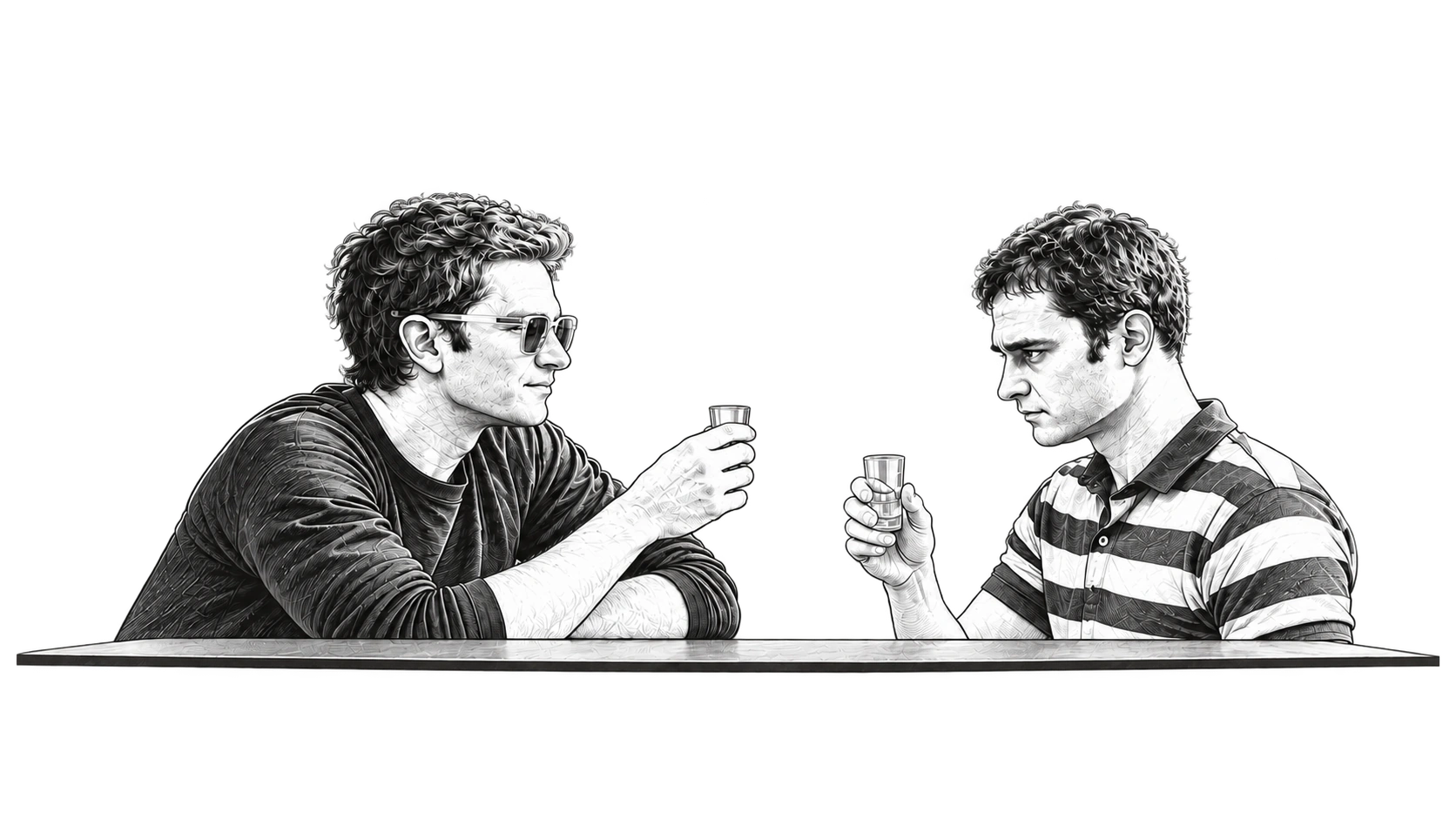
Checked on 6 October 2026 against Film at Lincoln Center and NEON, the original OpenAI statements, Vulture’s production interview and TheWrap’s attributed reactions. This is festival-news analysis, not a review of the complete film. No unverified teaser timecodes or claims about unseen scenes are included. The cover is an original AI-assisted editorial line drawing based on an official NEON visual reference, not official film artwork.
- Artificial will world premiere in the 64th NYFF Main Slate ↗Film at Lincoln Center · 1 September 2026
- Artificial — official NYFF film entry ↗Film at Lincoln Center · NYFF 2026
- Artificial — official distributor page ↗NEON · Checked 6 October 2026
- Artificial — Official Teaser Trailer ↗NEON / YouTube · 8 September 2026
- Luca Guadagnino Saw This Coming ↗Vulture / E. Alex Jung · 2 October 2026
- Artificial first reactions after the NYFF premiere ↗TheWrap / Casey Loving · 5 October 2026
- OpenAI announces leadership transition ↗OpenAI · 17 November 2023
- Sam Altman returns as CEO, OpenAI has a new initial board ↗OpenAI · 29 November 2023