Films / Analysis
Nearly three hours with Elizabeth Holmes. How A24 filled 2,000 screenings.
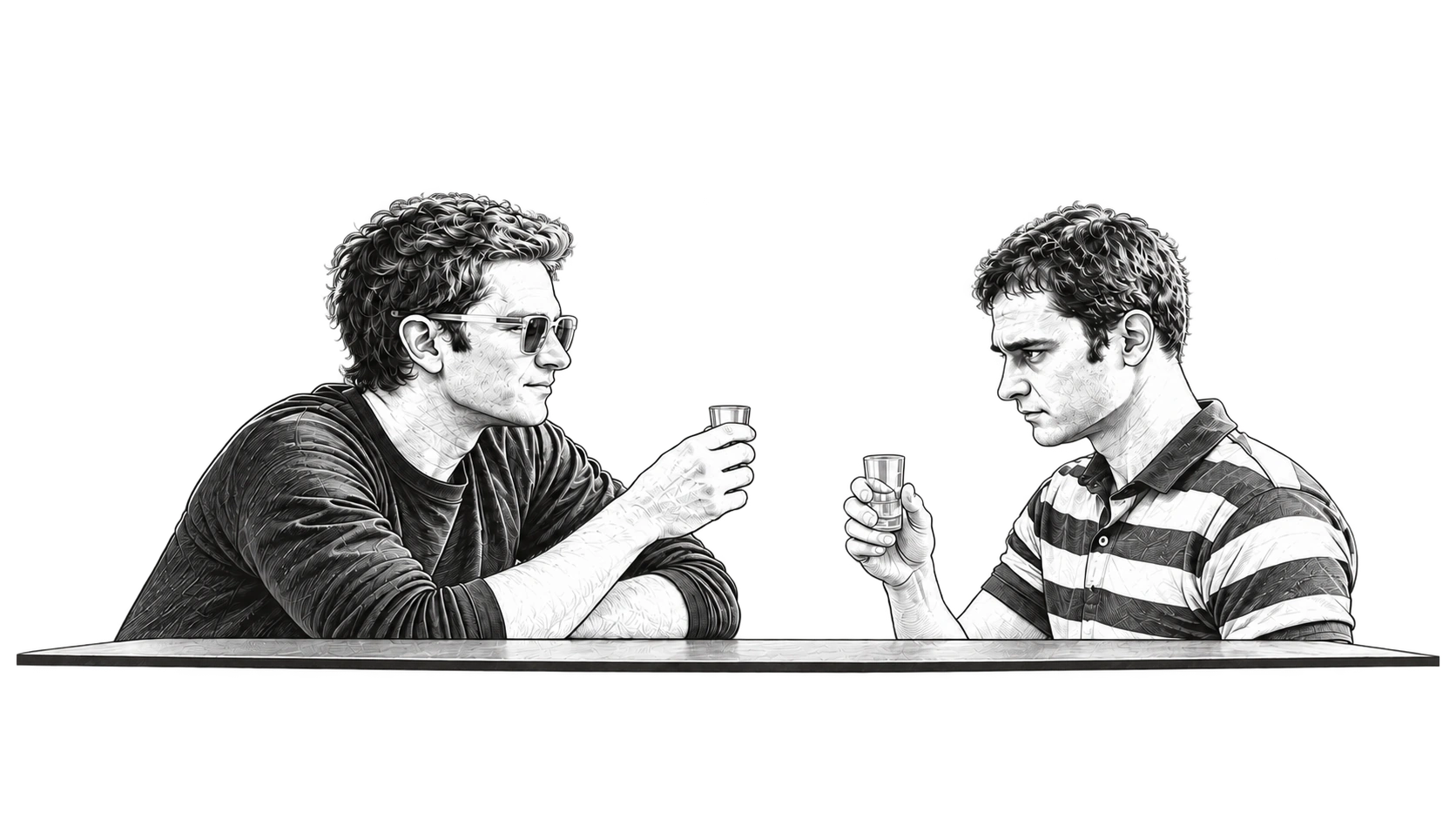
You Can See Everything brings Nathan Fielder, Lance Oppenheim and Elizabeth Holmes into a very unusual room. Behind its $15 million opening and 99% Rotten Tomatoes score is a filmmaking question: does seeing more mean understanding more?




A documentary asks for almost three hours of your evening. Its subject is someone whose public story seems already exhausted. Yet the opening weekend becomes an event. You Can See Everything has found a compelling invitation: come close enough to Elizabeth Holmes to discover how difficult it is to know what closeness proves.
The film opened in US cinemas on 16 October. Its directors are Nathan Fielder and Lance Oppenheim. This is a look at the release and the filmmakers’ publicly described methods, without major plot spoilers. It is not a review based on a full screening of the feature.
A nearly three-hour documentary fills the rooms
AP reported a $15 million North American opening across 855 theatres in Sunday studio estimates on 18 October. A24 said more than 2,000 screenings sold out. These remain the reported weekend estimates, rather than final audited receipts.
That is evidence of people buying a ticket for a substantial documentary. It does not tell us which ingredient persuaded them: the subject, the directors, the reviews, the release campaign or a friend’s recommendation. A useful analysis has to keep the result separate from its proposed explanation.
My reading of the release is that its attraction lies in an unresolved question. A familiar scandal can feel complete before a film begins. An encounter whose outcome you cannot predict gives the cinema a different function: a place to test your own reading alongside other people. The film’s title supplies that invitation with unusual economy.
Sources: Associated Press / Lindsey Bahr [2] · A24 [1]
An invitation is already a scene
Holmes founded Theranos, the blood-testing company whose promises made her a Silicon Valley celebrity. In 2022, a federal jury convicted her of investor fraud and conspiracy. That established history explains the scepticism around a new invitation to look closely; the film enters a story with consequences, not a blank character study.
A24’s premise starts 34 days before Holmes is due to enter prison: she invites a sceptical crew to document her life. The distributor describes the resulting story as a three-year journey. The short countdown and the much longer inquiry are different timeframes; filming did not simply last 34 days.
The invitation matters as much as the access. A subject who opens the door also establishes an initial relationship: host and guest, permission and gratitude, curiosity and hospitality. A filmmaker enters with an intention, but the act of being welcomed can alter the way a question is asked.
That gives this production a useful question for anyone filming a founder, an artist or a powerful client: what does the permission to be present make easier to see, and what does it make harder to challenge? Access is a working condition. It becomes meaningful through the decisions made inside it.
Sources: A24 [1] · US Department of Justice [9]
You Can See Everything — official trailer
Official A24 trailer, embedded from its original YouTube publication. Promotional footage is distinct from our editorial cover; the video has not been reuploaded.
The crucial camera move was deciding not to miss a reaction
At the NYFF discussion, reported by Variety, the directors described abandoning an initial single-camera, anamorphic approach for three cameras and a 4:3 frame. Panning between speakers had cost them the first moments of a reaction. Their revised coverage could stay with different participants at once.
There is a precise craft lesson here. A conversation has at least two events: somebody speaks, and somebody hears. A camera that arrives after the second event can show a composed answer while losing the transition into it. Simultaneous coverage gives an editor more temporal context. Whether that context is retained in the finished cut remains an editorial decision.
The narrower frame also makes attention a practical constraint. When a face occupies more of the available image, furniture and peripheral activity have less room to compete. The relevant test is simple: does the composition help us follow the exchange? Calling a lens cinematic is much less useful than asking which information it allows us to keep.
Sources: Variety / filmmaker statements at NYFF [3] · Film at Lincoln Center [4]
The filmmakers in conversation at NYFF64
Official introduction and Q&A. Discussion may contain spoilers; event 30 September, published 2 October 2026.
A close-up is evidence of a moment, not a lie detector
A held look can invite us to interpret hesitation, calculation, discomfort or fatigue. Those possibilities are not interchangeable, and an image alone cannot settle them. A responsible reading distinguishes an observable action from the motive we attach to it.
Editing adds another layer. The duration of a pause, the position of a reverse shot and the arrival of music all influence the confidence with which we connect two events. That is why a documentary’s promise of intimacy deserves formal scrutiny as well as factual checking. The point is to notice how a conclusion becomes persuasive.
For a viewer heading into this film, I would carry one question: when I think I understand someone, what exactly have I seen that justifies it? It is a more productive viewing exercise than treating every gesture as a confession. It also leaves space for the film to surprise us.
99% on Rotten Tomatoes: read the measure, not just the badge
The early 100% score needs a date. DocumentaryTube recorded 100% from 22 critic reviews on 12 October. At our 19 October check, the live Rotten Tomatoes page showed 99% from 117 critic reviews, and 98% from 1,000+ verified audience ratings. These are changing snapshots, not permanent labels.
The Tomatometer expresses the share of positive reviews. It is not an average mark of 9.9 out of 10. The audience measure comes from a different population. Neither number tells an individual viewer whether they will enjoy nearly three hours of ambiguity.
Together, strong reviews and ticket sales make a persuasive reason to pay attention. The more interesting editorial task is to give the reader something to notice after buying that ticket. A percentage can start the conversation; the film’s choices have to sustain it.
Sources: Rotten Tomatoes [5] · Rotten Tomatoes [6] · DocumentaryTube [8]
How the premise becomes an event
The campaign has an unusually productive title. “You can see everything” sounds like a promise of unrestricted access. It also supplies the question that access cannot answer on its own: will seeing be enough? For an editorial reading of the launch, that tension is the most distinctive asset.
A useful comparison is the difference between a film sold as a briefing and a film sold as an encounter. A briefing promises to organise what happened. An encounter asks us to spend time with people and reconsider how we judge them. This is a distinction between audience expectations, not a claim that every scene fits one category.
The lesson for a filmmaker is to give the audience a question worth carrying into the room. The lesson for a campaign is to preserve enough uncertainty for the screening to matter. Neither lesson guarantees a box-office result; both explain why this premise offers more than a recap of a known scandal.
Sources: A24 [1]
The people shaping what we see
IDFA lists Nathan Fielder and Lance Oppenheim as directors, David Bolen as cinematographer, Adam Locke-Norton as editor and Ari Balouzian as composer. Those credits matter to this discussion: point of view emerges through framing, selection, duration and sound, as well as through the person asking the questions.
My reason to put You Can See Everything on the Signals watchlist is the production question it makes unusually visible. A camera can grant access to a room. Understanding still requires a viewer to examine the relationship between what happened, what was recorded and what was assembled. That is a substantial promise for a documentary to bring into a cinema.
Sources: IDFA [7]
SOURCES & METHOD
The record behind the article
Source-led analysis of the release and the filmmakers’ published explanations, checked 19 October 2026. The full feature was not screened for this article; interpretations are editorial, not claims of firsthand scene-by-scene viewing. Sunday box-office estimates and dated review scores are labelled accordingly. Official videos remain hosted by their publishers. The original cover is a conceptual editorial illustration, not an official A24 poster or a frame from the film.
- You Can See Everything — official film page and trailers ↗A24
- Box Office: Elizabeth Holmes movie You Can See Everything is now a hit in theaters too ↗Associated Press / Lindsey Bahr · 18 Oct 2026
- How Elizabeth Holmes Was Secretly Filmed for You Can See Everything ↗Variety / filmmaker statements at NYFF · 3 Oct 2026
- Nathan Fielder and Lance Oppenheim present You Can See Everything at NYFF ↗Film at Lincoln Center · 2 Oct 2026
- You Can See Everything — current critic and audience scores ↗Rotten Tomatoes · Checked 19 Oct 2026
- About Rotten Tomatoes — how the Tomatometer and Popcornmeter work ↗Rotten Tomatoes
- You Can See Everything — festival credits ↗IDFA
- The early 100% Rotten Tomatoes snapshot ↗DocumentaryTube · 13 Oct 2026 (score checked 12 Oct)
- Elizabeth Holmes: Theranos investor-fraud conviction and sentencing ↗US Department of Justice · 18 Nov 2022