Films / Analysis
The Arc: a beautiful AI shot still has to survive the edit
A finished AI series makes a useful production question concrete: how much work sits between a promising generation and a shot you can keep? Credits, continuity and the cost of another attempt.



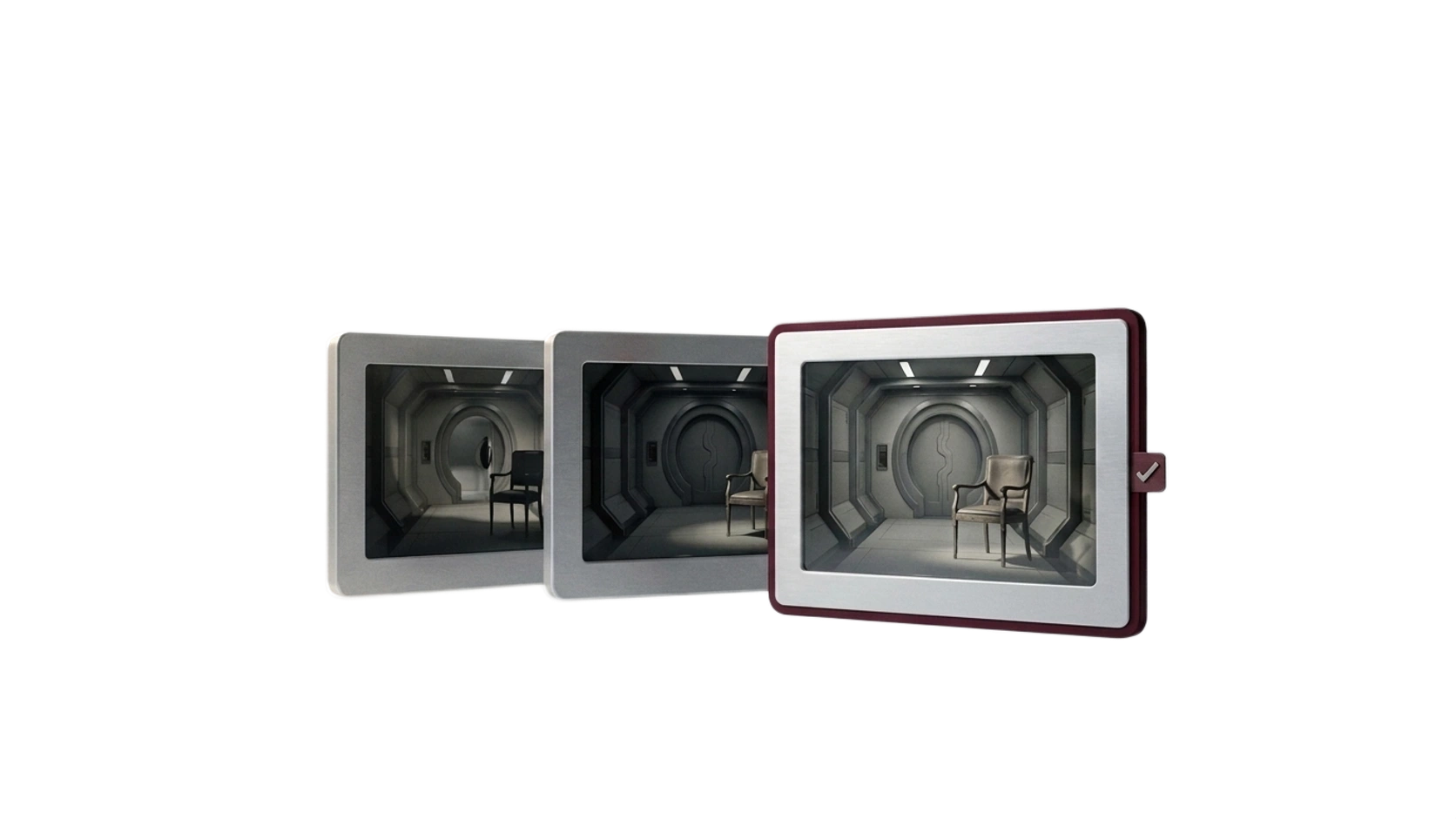

The lighting works. The movement looks convincing. Then the shot goes beside the previous one, and the scene stops making sense. A look arrives too early; an exit points the wrong way. The next generation must preserve everything that worked while fixing the decision that did not. That is where an AI production budget becomes interesting.
What the production account establishes
In an 11 October Business Insider report, The Arc’s creators described roughly $38,000 in Artlist-supplied AI credits. Director Darin Stewart said a shot could need eight to ten generations.
The series itself is older than this report. Artlist dates its private London premiere to 18 August and describes a five-episode project completed in three and a half months. The company is a production partner, so its account should be read with that involvement in mind.
Sources: Business Insider [1] · Artlist / Laura Ramsay [2]
Define finished before counting the savings
Credits are one budget line. A production estimate also needs the time spent directing, reviewing, editing and repairing the work. Comparing a generation invoice with the entire cost of a conventional shoot would compare different things. Nor can a selected production account establish a repeatable success rate for another team.
Consider an invented scene: a character finishes a sentence, holds a look, then leaves. An elegant camera move cannot replace the missing pause. A convincing face cannot repair the wrong exit direction. The acceptance criteria belong to the scene: what the viewer must understand, when the information arrives and how the action continues across the cut.
The problem can be outside the image
Artlist also describes inconsistent accents between generated voice takes. The team reportedly lost three days and exported audio scene by scene as a workaround. This is the production partner’s account, not our test.
For a director, continuity includes a voice, a rhythm and a believable response as well as a face. A faster image tool will not necessarily shorten a delivery schedule if those dependencies still need repair. The useful planning question is where the next approval can fail, and who has the time and authority to fix it.
Sources: Artlist / Laura Ramsay [2]
A small test worth running
For a studio trial, I would use three connected shots with a clear action and one spoken line. Record generation spend, review time and the work needed to assemble them. Then request a precise revision: hold the look longer while preserving the line, the light and the exit. This is a proposed test, not one conducted for this article.
A useful record would count accepted shots and explain rejected ones. It would also track whether a fix forced changes elsewhere. That gives a producer something actionable: a basis for scheduling the next scene and reserving time for revisions, rather than an optimistic multiplication of clip length by a model’s price.
The Arc is worth discussing as a completed production with a process to examine. Its existence alone cannot prove universal savings or artistic superiority. The more useful measure is the cost of a shot that survives assembly, feedback and the final cut.
SOURCES & METHOD
The record behind the article
Checked 12 October 2026 against Business Insider’s reporting and Artlist’s production account. Figures are attributed reports, not independently audited budgets or model benchmarks. We did not run the proposed test or review the complete series. The scene examples and production recommendations are editorial analysis. Watch the original through the Artlist TV source link; no footage has been reuploaded.
- Production reporting by Kelsey Vlamis ↗Business Insider · 11 October 2026
- The Arc: Artlist’s first original AI series premieres in London ↗Artlist / Laura Ramsay · 24 August 2026
- Watch The Arc on the original publisher’s platform ↗Artlist TV