Tools / Analysis
Meta put AI to work in DaVinci Resolve. How much of the edit can you trust?
Watching the rushes, choosing a moment, making the vertical cut. Meta’s new open-weight model brings a familiar production question into focus: how do you review the judgment behind an automated edit?




The brief sounds easy: find the best moment and make it vertical. The difficult word is best. Is it the sharpest frame, the clearest action, or the half-second when a person decides not to speak? Before an editor touches the timeline, the work has already become a question of judgment.
Meta’s 15 October launch of Muse Spark Open describes an on-device Muse Code workflow that reviews footage frame by frame, selects strong moments and crops vertically in DaVinci Resolve. That is the company’s account; we have not run this workflow ourselves.
The useful question is how much of that judgment an editor can inspect, correct and keep.
One workflow, three different pieces
The model card lists text, image, video and audio inputs, with text output. Its architecture has 816 billion total parameters, 42 billion active, and a one-million-token context window. Those specifications describe a multimodal reasoning model; an exported movie still requires other software.
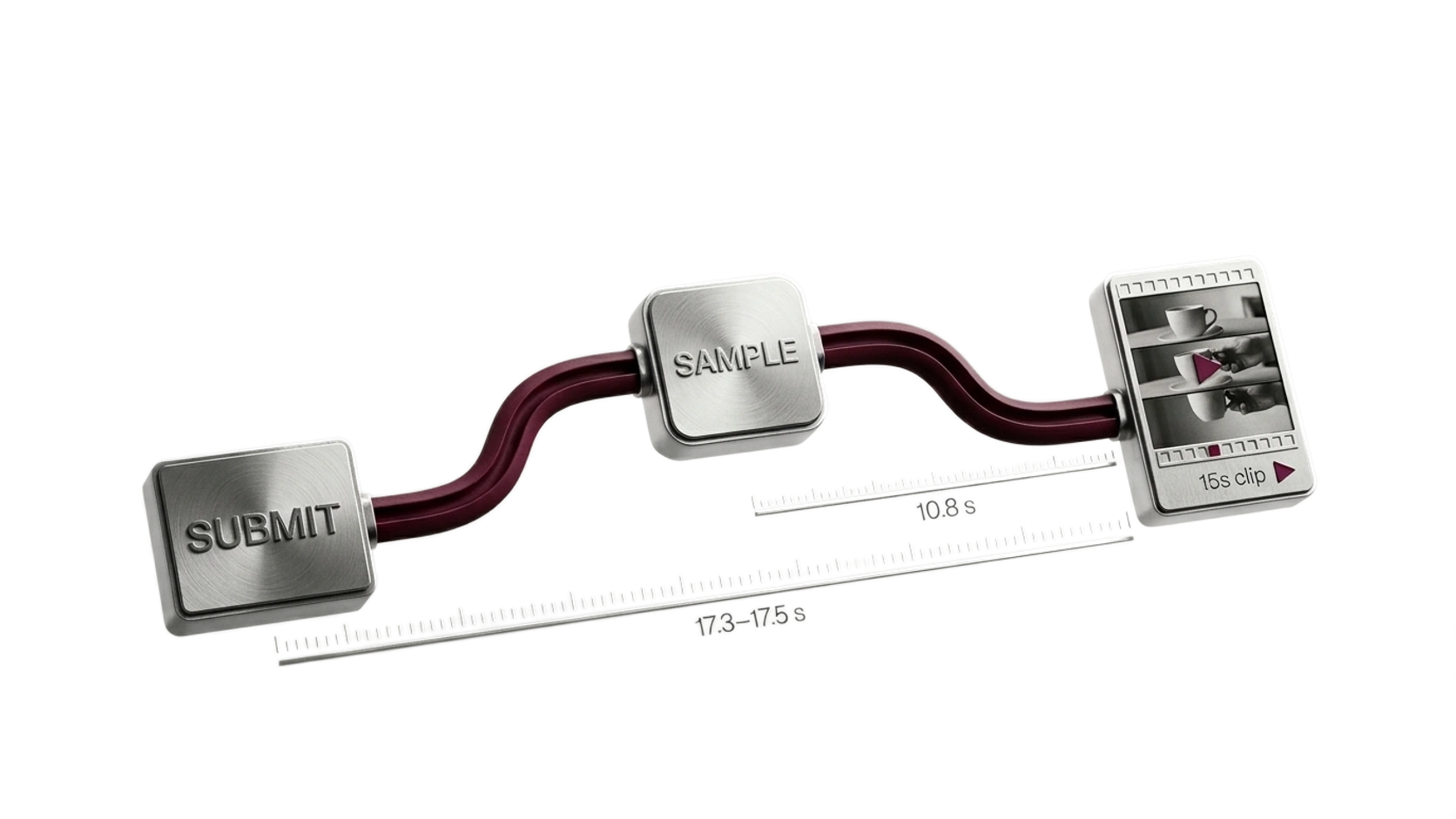
Muse Code supplies the agent environment. Meta describes computer-use capabilities for operating applications and visibility into agent actions. Resolve supplies the editing environment. Keeping those responsibilities separate helps locate a failure: misunderstanding the footage, choosing the wrong operation and executing it incorrectly are different problems.
For a studio, the deliverable should include an editable project and a clear account of the changes. A convincing MP4 cannot tell you whether the next client note will take a minute or force the entire process to restart.
Sources: Meta AI Research [1] · Meta Superintelligence Labs / Hugging Face [2] · Meta [3] · Alexandr Wang / Meta [4] · Alexandr Wang / Meta [5]
The launch film — a separate creative credit
The creator’s original post and demonstration on X.
Wang credits this film’s direction and editing to Muse Wonder Full, a different model. It is launch context, not a demonstration of Spark Open operating Resolve. The Resolve workflow is described in Meta’s announcement; we have not independently tested it.
The strongest moment may be the quiet one
Imagine an interview with three usable answers. One is concise, one is more articulate, and one contains an awkward pause before the truth arrives. An automated selection could be technically clean and dramatically wrong. A list of attractive moments does not yet establish the sequence’s point of view.
The brief therefore needs a dramatic objective. Ask for the moment a confident explanation becomes uncertain, preserve the breath before the answer, and retain enough context to avoid changing its meaning. Request source timecodes and a reason for each selection. These are proposed editorial requirements, not features we have verified in the launch workflow.
A vertical crop introduces another decision: whose reaction matters? Keeping the speaker centred can remove the listener who makes the scene work. The frame must follow the relationship, including moments when nothing visibly happens.
Review the omissions too. A selection can look excellent while missing a contradiction, an essential qualifier or a more truthful take. For documentary work, I would want a short list of rejected alternatives beside the chosen sequence. That makes disagreement useful: the editor can understand the choice without searching the entire shoot again.
Local comes with a substantial desk
Apple’s accompanying research uses Mac Studio M5 Ultra systems with 512 GB memory each. Quantised NVFP4 weights occupy about 493 GB before working memory, requiring multiple machines. At 8,192-token context, two-machine tensor parallelism produces 24.99 text tokens per second; four machines reach 36.73. First-token latency is 8.2 and 4.8 seconds respectively, with decode measured over 128 output tokens.
These are language-model timings, not video playback, rendering or completed-edit speeds. For a production decision, measure the whole job: prepare media, inspect it, execute changes, recover from errors and review the result. A faster response loses its advantage if checking its work takes longer than making the edit yourself.
Sources: Apple Machine Learning Research [6]
A benchmark can score an action. Can it score a cut?
Meta’s evaluation methodology combines official leaderboards, internal runs and some competitors’ self-reported results. Its OSWorld-Verified setup uses 361 Ubuntu desktop tasks; Video-MME v2 evaluates video understanding with subtitles and no audio. These conditions matter when interpreting broad claims about computer use and visual reasoning.
None of those measurements answers whether a cut preserves an actor’s intention. For editing, a useful evaluation needs two layers: did the requested operations happen, and did they serve the scene? A technically correct crop may remove essential information. A polished sequence may omit the one sentence the audience needed to understand it.
Sources: Meta [7]
Choose the intervention before choosing the model
Resolve already offers specialised assistance: Blackmagic describes IntelliSearch for finding media by content and IntelliScript for assembling a timeline against script text. Standard trim tools provide exact control of edit points. Runway’s Aleph 2.0 addresses another task: modifying the imagery within existing video. These approaches can coexist within one production.
The comparison below is an editorial map of the work, not a measured performance ranking. A precise, already-decided trim seldom needs an open-ended reasoning process. A large, poorly organised bin may benefit from assistance, provided the editor can trace every recommendation back to the source.
Sources: Blackmagic Design [8] · Blackmagic Design [9] · Runway [10]
| Approach | Useful task | What to inspect |
|---|---|---|
| Agent working in Resolve | Carry a brief through several operations | Reason for the selection; reversible changes |
| Resolve’s specialised AI tools | Find material or assemble against a script | Coverage, missed moments and source matches |
| Manual timeline trim | Execute an exact timing decision | Frames, rhythm and audio continuity |
| Generative video modification | Alter a visible element inside a shot | Requested change and unintended visual drift |
Open weights still need a production plan
The model card lists downloadable weights and access through third-party API providers. Those are different deployment choices. Before choosing either, define the job: an occasional assisted selects pass, or a repeatable service handling a studio’s daily material. The same demonstration does not establish the economics or operating effort of both.
The Muse Model License includes attribution and usage requirements, with a separate-agreement condition for qualifying model-as-a-service businesses. Internal use is treated differently from that category. Open weights therefore should not be described as unrestricted open source; deployment teams should read the terms for their intended use.
Our production rule would be to establish where footage, transcripts and action logs travel before handing over client rushes. Local inference is one part of that map. An agent can still be connected to external tools. Start with a duplicate project, retain the original media, and require a reviewable timeline before treating an export as approved.
Sources: Meta Superintelligence Labs / Hugging Face [2] · Meta [11]
The test: keep the pause, change the frame
Here is the test we would run; it has not been performed. Use six minutes of owned footage: an interview, a second camera and several cutaways. Include one deliberate pause, an interrupted answer and a reaction that happens away from the speaker. First, have an editor mark the indispensable moments without seeing the agent’s choices.
Ask the agent for a thirty-second vertical sequence, source references and an editable timeline. Then give one note: retain the silence before the answer and widen the composition to include the listener. Keep the other decisions fixed. This revision tests whether the system can understand a local correction without quietly rebuilding the scene.
- Record setup, autonomous work, intervention and review time separately.
- Check meaning, source timecodes, audio continuity and the saved project.
- Count accepted decisions and unwanted changes after the revision.
An assistant earns trust one decision at a time
Our provisional verdict: this is a credible reason to investigate supervised selection and reframing, with a substantial hardware and integration question attached. There is not yet enough evidence here to score its reliability as an editor. The useful outcome would be a first pass whose decisions are easy to challenge, preserve or replace.
The promise becomes interesting when the next note arrives. Keep that hesitation. Show the other person. Let the shot breathe. An editing assistant proves its value by making those choices easier to realise.
SOURCES & METHOD
The record behind the article
Checked 16 October 2026 against Meta’s announcement, model card, evaluation methodology and license, Apple’s MLX measurements, and official Blackmagic and Runway product pages. The Resolve workflow is company-reported. We did not run the model, benchmark an editing task or test its revisions. Workflow comparisons, the proposed test and the verdict are editorial analysis. Embedded launch media remains credited to its original publisher.
- Introducing Muse Spark Open ↗Meta AI Research · 15 October 2026
- Muse Spark Open 816B A42B NVFP4 — model card ↗Meta Superintelligence Labs / Hugging Face · Checked 16 October 2026
- Muse Code — agent environment and computer use ↗Meta · Checked 16 October 2026
- Muse Spark Open — original launch film ↗Alexandr Wang / Meta · 15 October 2026
- Launch-film direction and editing credit: Muse Wonder Full ↗Alexandr Wang / Meta · 15 October 2026
- Local and Distributed Large LLM Inference with MLX and RDMA on Mac Studio ↗Apple Machine Learning Research · 15 October 2026
- Muse Spark Open Evaluation Methodology ↗Meta · October 2026
- DaVinci Resolve — What’s New ↗Blackmagic Design · Checked 16 October 2026
- DaVinci Resolve — Edit ↗Blackmagic Design · Checked 16 October 2026
- Aleph 2.0 — video modification ↗Runway · Checked 16 October 2026
- Muse Model License ↗Meta · 15 October 2026