Tools / Analysis
The shot works. The sound doesn’t. Meet Mirelo SFX 2.0.
Keep the picture you finally got right. Mirelo’s new sound model promises to replace unwanted music and rebuild the scene around its dialogue. The useful question is what survives that second pass.





Imagine the take you would keep: the movement is right, the light holds, the character pauses exactly where the scene needs it. Then you turn the sound on. A sentimental score fills a moment that should have been quiet. Starting again means putting the good part back into the lottery.
Mirelo SFX 2.0, announced on 14 October, addresses that expensive moment after the image succeeds. The proposition is a new sound pass over footage you have already chosen. For a filmmaker, that makes this release worth examining beyond its launch reel.
The distinction that matters is between preserving the picture, preserving the words and preserving a performance. Those are three different approvals.
Picture approved. Sound still open.
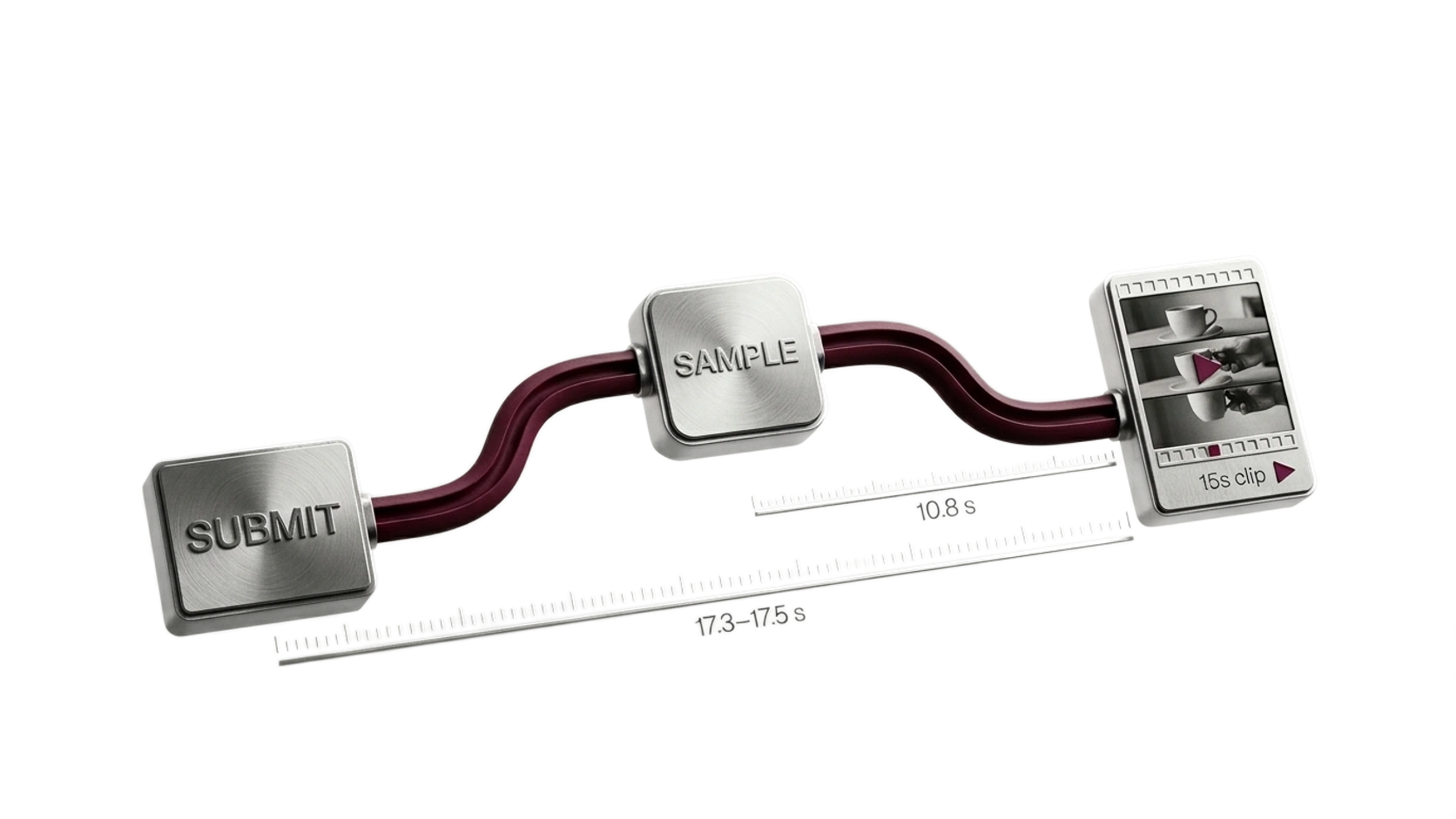
The product takes existing video as its guide for effects, Foley and ambience. Mirelo also advertises unwanted-music removal, dialogue preservation and continuity across cuts, with up to ten minutes supported in Studio and the API. Longer work requires an Enterprise arrangement. These are the company’s stated capabilities.
That separation gives a director a useful place to make decisions. A beautiful shot can be evaluated for framing and performance before its sound is approved. It also makes rejection more precise: “the room is too large” or “that impact is too heavy” becomes a sound note attached to a retained image.
Sources: Mirelo Team [1] · Mirelo [2]
The launch demonstration
The creator’s original post and demonstration on X.
Official company showcase. Its selected examples illustrate the promised workflow; they do not establish reliability on other footage.
The most useful sound may be the one you remove
Mirelo’s music-removal example targets a particular irritation: a video model has composed music nobody requested. The company presents SFX 2.0 as a way to replace that unwanted accompaniment while retaining dialogue.
Listen for the negative space, not just the new effects. Does the pause still feel like a pause? Does the room remain audible beneath speech? A track can contain more detail and make a scene less convincing. The editorial opportunity here is control over emphasis: deciding what the audience should notice, and what should stay out of the way.
Sources: Mirelo AI / X [3]
Unwanted music: the company’s before/after
The creator’s original post and demonstration on X.
Publisher’s music-removal example. Compare both versions at similar playback loudness; this is not a Signals test.
“Keep the dialogue” needs a closer listen
Mirelo’s own descriptions differ. The launch FAQ says speech is regenerated with the new soundtrack; the product FAQ describes separating and keeping it. Neither wording alone establishes that an approved voice is delivered unchanged.
This is a documentation discrepancy, not proof that SFX 2.0 changes an actor’s identity. It tells us what to check. Words can survive while a breath, a hesitation or the weight of a consonant shifts. In a dialogue scene, those details can carry the performance.
Keep the source recording available. Compare the line on its own, then inside the scene. An effect that sounds spectacular in isolation may cover the quiet word the audience needs to hear.
Sources: Mirelo Team [1] · Mirelo [2] · fal [6]
Speech preservation: listen to the performance
The creator’s original post and demonstration on X.
Official Mirelo demonstration. Check breaths, pauses and consonants against the source; no independent voice-fidelity measurement is claimed here.
A room should survive the cut
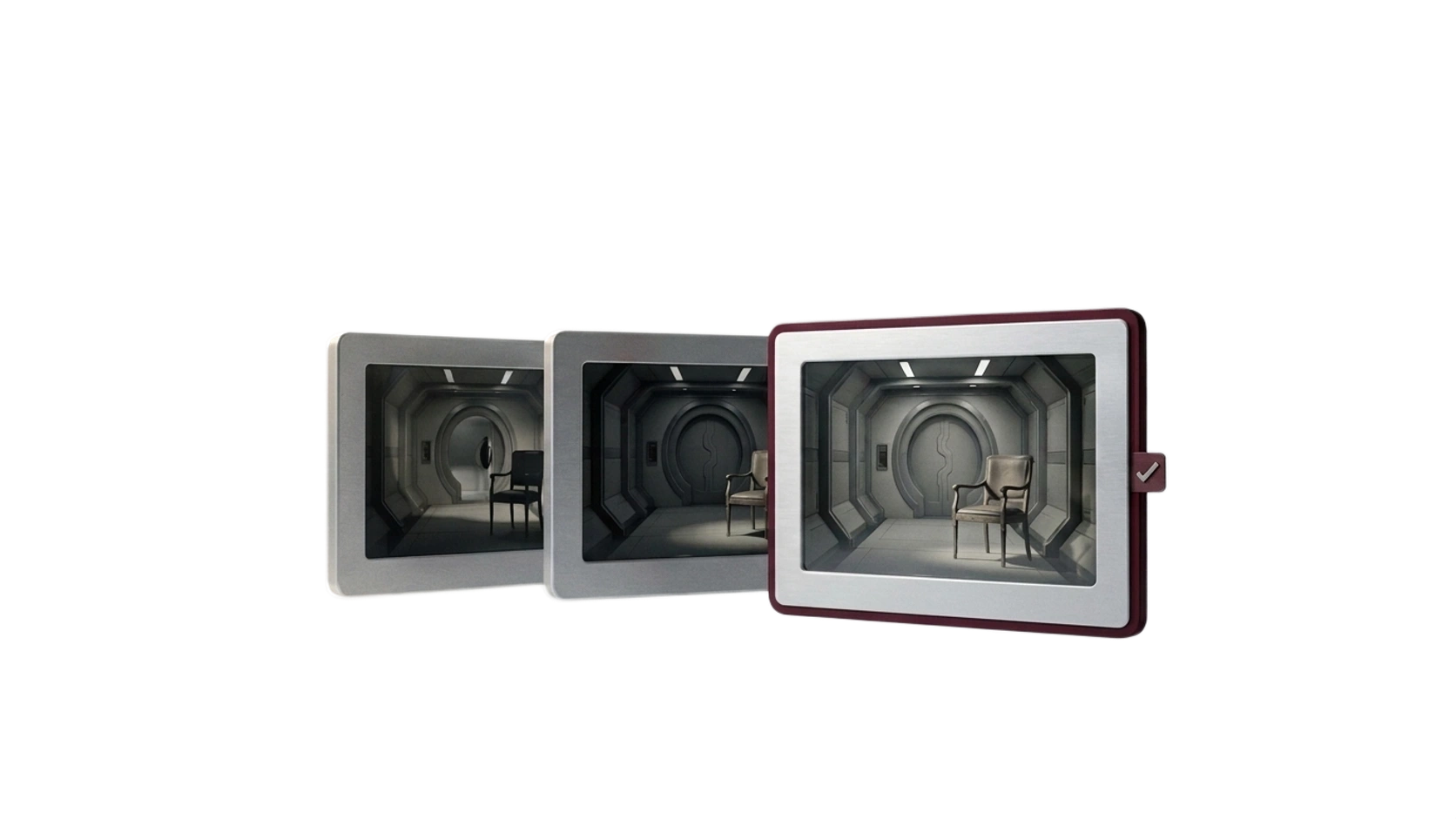
The consistency demo presents the same sound-world across separately assembled shots. The useful production question is whether the viewer still believes both angles belong to one place.
Continuity does not mean identical loudness. A close shot and a distant shot can legitimately sound different. What should persist is the scene’s logic: the character of the room, the object’s material and the relationship between on-screen contact and the sound we hear.
A video-conditioned model also cannot decide every narrative intention from the picture. A door outside the frame may matter more than the cup inside it. The director still decides whether that unseen event should announce itself.
Sources: Mirelo AI / X [5]
Three shots, one sound world
Conceptual editorial illustration supplied by the author. It represents continuity across cuts; it is not footage or an output from Mirelo.
Sound continuity across shots
The creator’s original post and demonstration on X.
Company-published continuity example. Listen at the cuts as well as at the loudest events.
What the comparison actually measures
Mirelo reports blind listening comparisons: 25 screened crowd raters evaluated 30 videos per comparison, with a tie option. The table separates specialist sound models from the native audio of video generators.
The promoted 72% against Seedance combines 47% preference with 25% ties. It is not a 72% win rate. These are vendor-reported preferences, not our measurements.
The results make a case for auditioning a second sound pass. They do not tell us how many revisions a difficult shot needs, whether a whisper survives, or whether the preferred version serves the film’s intention. A listener can prefer a richer soundtrack while a director needs a quieter one.
Sources: Mirelo Team [1] · Mirelo [2]
| Compared audio | Mirelo preferred | Other preferred | Tie |
|---|---|---|---|
| Sony Woosh · SFX | 81% | 9% | 10% |
| Kling Foley · SFX | 63% | 18% | 19% |
| Veo 3.1 Fast · native | 57% | 21% | 22% |
| Seedance 2.5 · native | 47% | 28% | 25% |
A new soundtrack is not yet a full mixing session
On fal, the video-to-audio endpoint exposes text guidance, negative prompts, a seed and a speech-preservation switch. It returns audio; the separate video-to-video endpoint returns the input video with a new soundtrack. That distinction matters when handing work back to an editor.
A coherent generated mix also does not automatically provide separate dialogue, Foley and ambience tracks. Mirelo lists a dedicated stem variant as coming soon. If the client wants only one footstep quieter, the degree of local control matters as much as the first result.
At fal’s checked introductory rate, one minute costs $0.60 per sample; two alternatives cost $1.20. The endpoint defaults to two samples. The $0.010-per-output-second offer runs through 13 December 2026, with $0.015 listed from 14 December. This is fal pricing, not a universal Mirelo tariff.
Budget for selection, too. A cheap rejected generation still consumes listening time. For an actual job, record attempts and the time spent comparing them; that is closer to the cost of usable sound.
Sources: fal [6] · fal [7] · fal [8] · Mirelo Team [1]
One picture, another sound pass
An editorial metaphor for revising sound independently. These sculptural waveforms are illustrative; they are not exported stems or measurements from the model.
The test we would run before the final mix
Use a short exchange in a quiet room. A person finishes a sentence while placing a cup down; the edit cuts to a second angle. Keep the clean voice separately and add unwanted music to a duplicate. This is a proposed Signals test, not an experiment we have performed.
Ask for restrained ceramic contact and a consistent room. Then request one change: make that contact quieter. The second result reveals whether the tool can revise a sound decision without disturbing the scene around it.
- Performance: words, breaths and pauses against the source.
- Synchronisation: the cup’s first contact, not just the largest visible movement.
- Continuity: room tone and acoustic perspective through the cut.
- Revision cost: rejected outputs, listening time and what changed unintentionally.
A reason to keep the take
Mirelo SFX 2.0 is a relevant tool to audition after picture selection. Its value will be clearest when the image is expensive to replace and the sound is still negotiable.
Our verdict is provisional: the workflow is compelling, the published comparisons are encouraging, and dialogue fidelity remains a check rather than an assumption. A final mix earns its place by supporting the scene. The best result may be the one you stop noticing.
SOURCES & METHOD
The record behind the article
Checked 15 October 2026 against official Mirelo pages, its original X demonstrations and fal documentation. Technical capabilities and listening scores are publisher-reported. Embedded videos are company demonstrations, not our outputs. No original model run, controlled listening study or voice-fidelity measurement was performed. The proposed test and production judgments are editorial analysis.
- Mirelo SFX 2.0: change the sound, keep the video ↗Mirelo Team · 14 October 2026
- Mirelo SFX — product, comparisons and FAQ ↗Mirelo · Checked 15 October 2026
- Music leakage — original demonstration ↗Mirelo AI / X · 14 October 2026
- Speech preservation — original demonstration ↗Mirelo AI / X · 14 October 2026
- Consistency and long-form — original demonstration ↗Mirelo AI / X · 14 October 2026
- SFX 2.0 video-to-audio — input and output schema ↗fal · Checked 15 October 2026
- SFX 2.0 video-to-video ↗fal · Checked 15 October 2026
- SFX 2.0 video-to-audio — current pricing ↗fal · Checked 15 October 2026