Tools / Analysis
Google proposes a sleep phase for AI that keeps learning
The research separates absorbing information from consolidating it. Its long-context result is striking; the training conditions matter just as much.
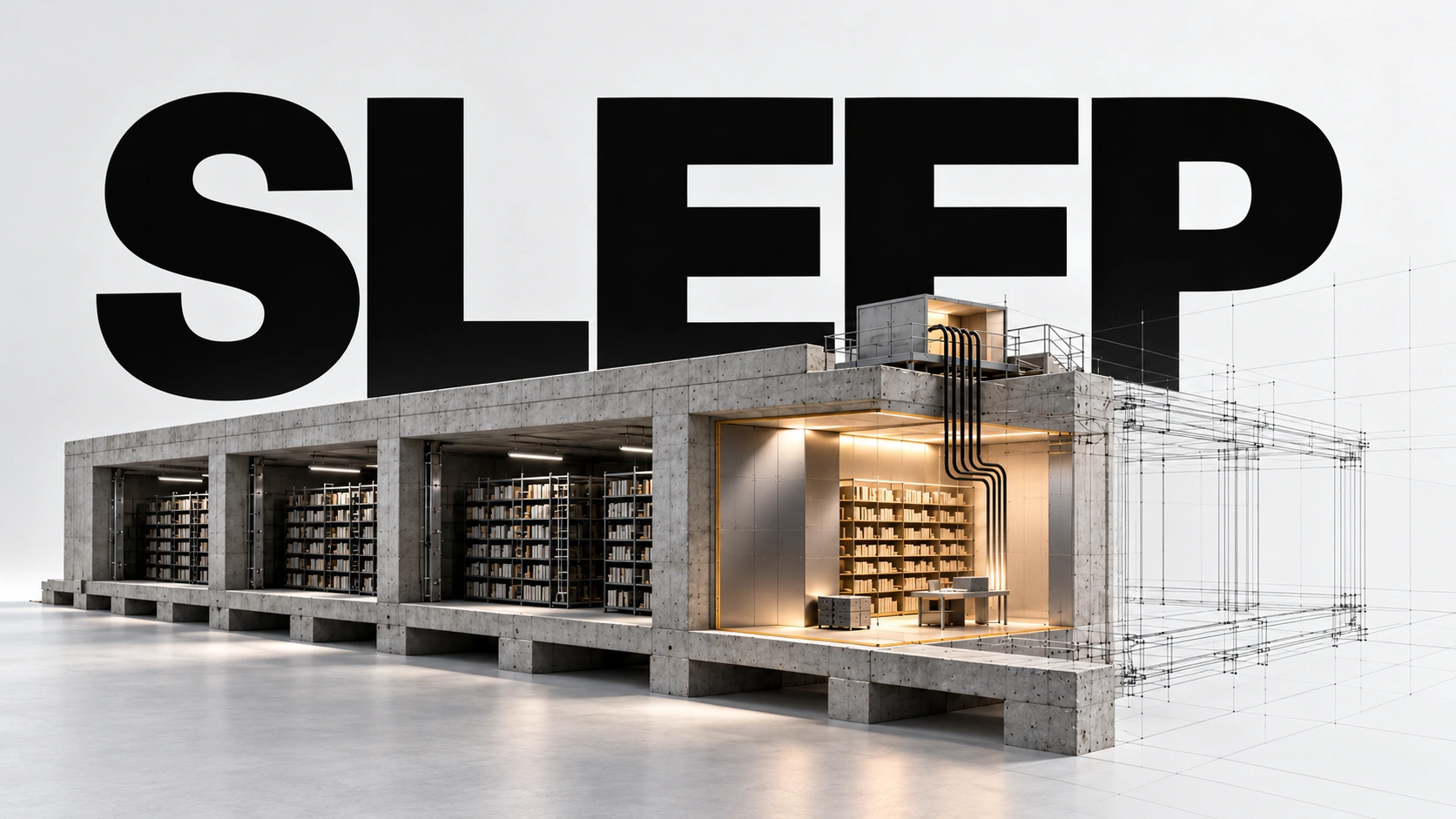

Google Research’s Sleep framework gives a language model a scheduled consolidation phase: information gathered while active is transferred into longer-lasting parameters. The aim is to learn new material without losing earlier capabilities. Google explained the work on 27 October; this is research, not an announced Gemini feature.
What happens during “sleep”
The system opens reserved expert capacity, distills temporary knowledge into it, then clears fast memory for another cycle. A “dreaming” stage generates and selects practice examples for further training. These are weight updates under designed rules, not biological sleep or a model rewriting its own software.
Sources: Google Research [1]
Read the result with its conditions
Hope with Sleep reaches near-perfect performance at 10 million tokens on BABILong. Appendix B.2 specifies benchmark fine-tuning; performance drops substantially without it. This does not establish universal ten-million-token recall. Table 2 separately reports Qwen3-8B reasoning results as average@16:
Sources: Behrouz, Hashemi, Javanmard and Mirrokni / arXiv [2]
| Method | AIME 2024 | AIME 2025 | HMMT 2025 |
|---|---|---|---|
| Base (Instruct) | 73.8 | 68.1 | 42.4 |
| Sleep | 79.2 | 69.0 | 46.1 |
Memory becomes a maintenance problem
Our reading: the practical prize would be an assistant that carries useful corrections forward, instead of requiring the same explanation again. But retention also creates an obligation. If a mistaken instruction becomes durable, how does the user inspect, correct or remove it? A production system would need an answer alongside its accuracy score.
The next useful demonstration would follow a changing project: learn a rule, replace it, preserve unrelated skills, and measure the compute bill. That would show whether consolidation makes an assistant easier to live with, beyond making a benchmark score higher.
SOURCES & METHOD
The record behind the article
Google’s 27 October explanation and the linked paper were checked on 1 November 2026, including Table 2 and Appendix B.2. Results are the authors’ reports, not our replication.
- The sleep framework: A new way for LLMs to retain knowledge in continual learning Google Research · 2026-10-27
- Language Models Need Sleep: Learning to Self-Modify and Consolidate Memories — Table 2 and Appendix B.2 Behrouz, Hashemi, Javanmard and Mirrokni / arXiv · 2026-07-10