The director’s view
GitHub and the rise of the AI first draft
A prompt can now become a proposed code change without a developer typing the opening version. Following that change through review reveals what delegation actually involves.

More than 40% of September’s pull requests on GitHub began with a detectable AI agent’s first draft, up from 17% in March. GitHub published the finding in its 28 October Octoverse report. The unit matters: a proposal to change code, rather than a count of code lines.
The proposal is the unit
Octoverse includes public and private repositories. Agent use that GitHub cannot detect is absent from this count. The annual reporting window ends on 30 September 2026. These are platform observations, not an experiment that assigned comparable jobs to people and agents.
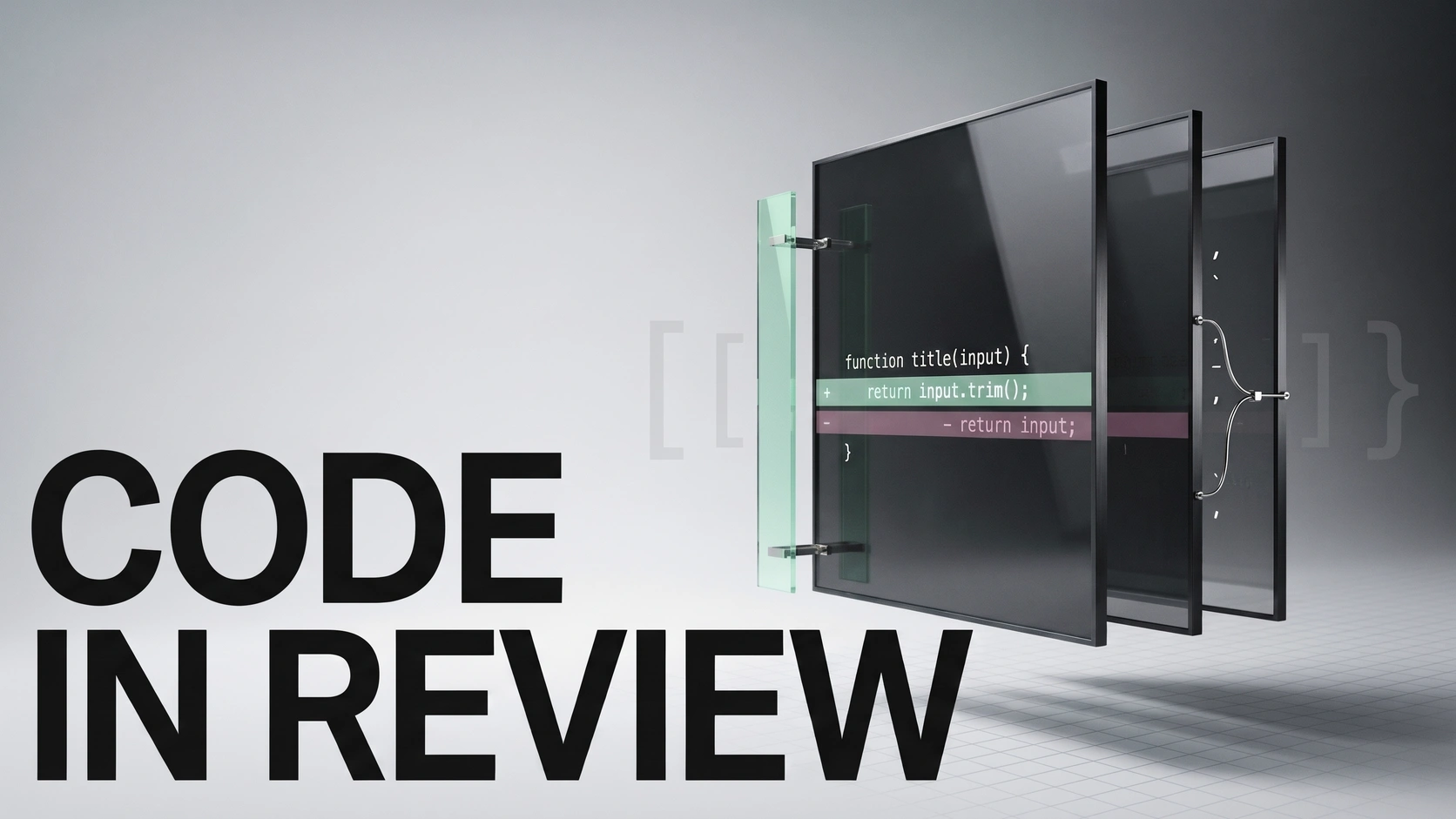
A pull request packages a proposed change so that someone else can inspect it before it enters the project. GitHub brings the discussion, edit history, automated checks and file differences together. The difference view is especially useful: it shows the lines added and removed, making the proposal inspectable instead of leaving it as an assurance that a task is done.
That makes the first draft a concrete handoff. The reviewer can follow the implementation, ask for corrections or approve it. GitHub distinguishes a review comment from approval and from a request for changes; repositories can require reviews before a merge. Delegation therefore has a visible intermediate output, with room for revision before it becomes part of the shared codebase.
Sources: GitHub [1] · GitHub Docs [2] · GitHub Docs [3]
GitHub’s published figures
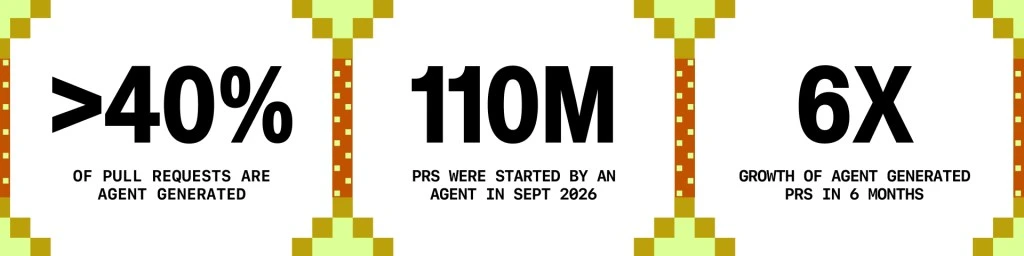
GitHub’s own telemetry, reproduced from the report.
From a conversation to changed files
GitHub’s current Copilot documentation describes the mechanism: an agent can investigate a repository, plan a change, edit files and run tests in a cloud environment. A developer can review the result and request refinements before opening a pull request. The system receives a task and an environment in which to carry it out.
On 28 October, GitHub also opened its new cloud experience to paid Copilot users, subject to organisational policies. Sessions can continue across web, mobile and local clients. That continuity is useful when the work outlasts one interaction: the conversation, proposed changes and next instruction belong to the same task.
The task still needs a definition of success. GitHub’s application card recommends bounded assignments with acceptance criteria and project-specific context. Asking for a feature and saying how to verify it are separate pieces of information. An agent may complete a plausible implementation while missing the behaviour the requester intended.
Sources: GitHub Docs [4] · GitHub Docs [5]
Several models behind one task
Another 28 October release makes that delegation more layered. Copilot Fusion is generally available and can select and coordinate models within a task. Its documented patterns include a single model working directly, an initial attempt escalated after a quality check, and a draft reviewed by a second model before revision. The user chooses an effort level rather than manually assigning every step.
The service charges for the models it uses at their respective rates. An automatic second opinion is therefore part of both the execution plan and the cost. This release follows the measured adoption period; it cannot explain that earlier growth.
Sources: GitHub [6]
What finished work would tell us
Software researchers were arguing against single-number productivity measures before coding agents became commonplace. The 2021 SPACE framework, developed by Nicole Forsgren and colleagues, treats activity as only part of a wider picture. A high volume of changes cannot, on its own, tell a team whether it delivered useful software with less effort.
A pull request is a package, not a standard quantity of work. A ten-line fix and a thousand-line feature can each add one to the counter. Agent adoption changes who can prepare that package. Judging what it contains — whether the software now does the intended thing, and at what cost — requires a different measurement.
Sources: Nicole Forsgren et al. / ACM Queue / Microsoft Research [7]
SOURCES & METHOD
The record behind the article
Based on GitHub’s report and product documentation, with research context from the SPACE framework. Checked on 29 October 2026. No independent product test was conducted.
- Octoverse: Commits, pushes, reach new highs in 2026 as developers build with agents GitHub · 2026-10-28
- Pull requests GitHub Docs
- Pull request reviews GitHub Docs
- GitHub Copilot on GitHub.com and GitHub Mobile GitHub Docs
- Application card: GitHub Copilot Agents GitHub Docs
- Route and orchestrate models with GitHub Copilot Fusion GitHub · 2026-10-28
- The SPACE of Developer Productivity: There’s more to it than you think Nicole Forsgren et al. / ACM Queue / Microsoft Research