Tools / Analysis
ByteDance’s world model: what if you could step inside the shot?
A paper plane crosses an AI-generated room. A spoon appears on command. Then the demo turns to cinema. ByteDance’s world-model showcase raises a better question than whether AI can make a prettier video: can you direct what happens next?



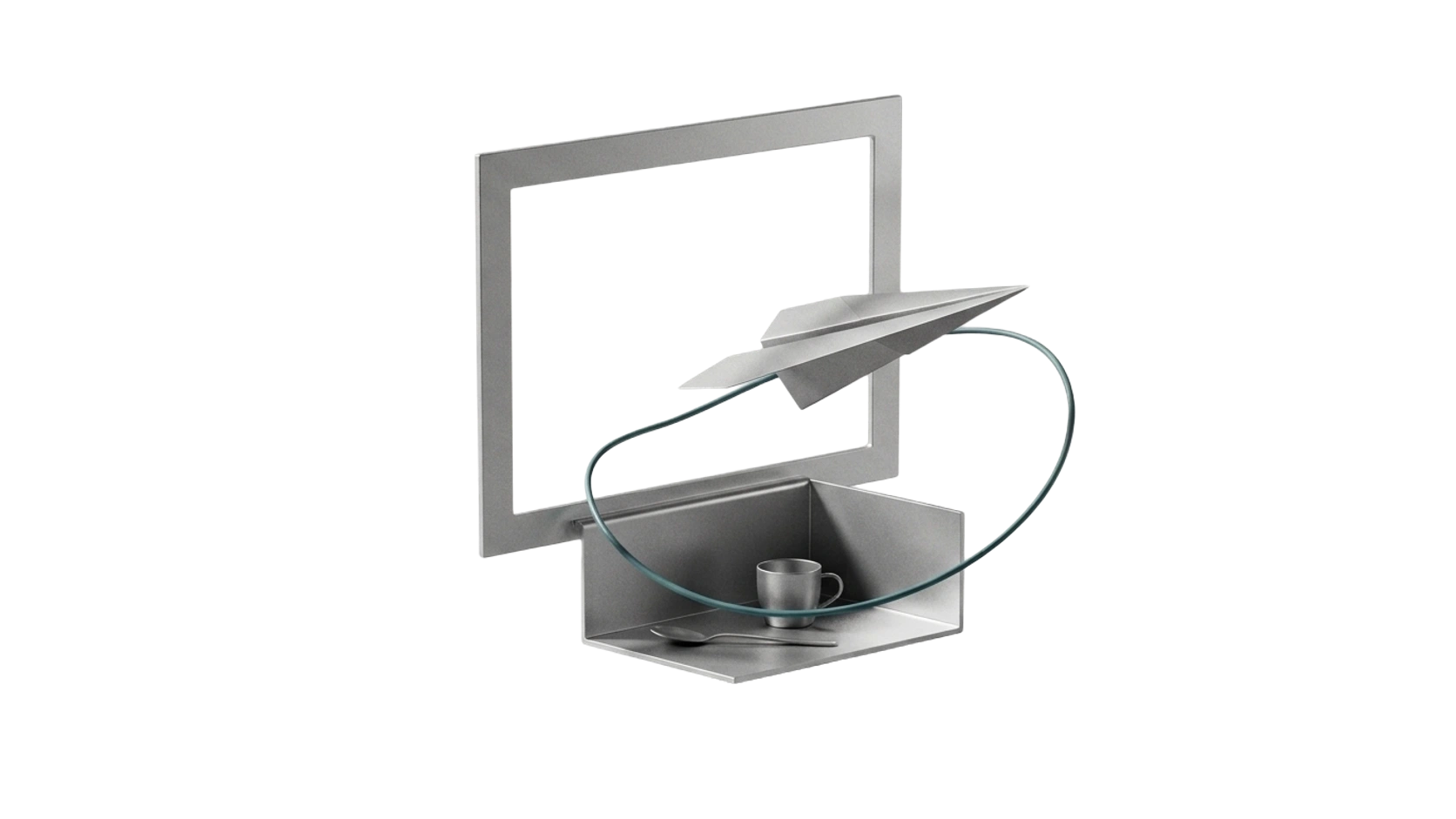

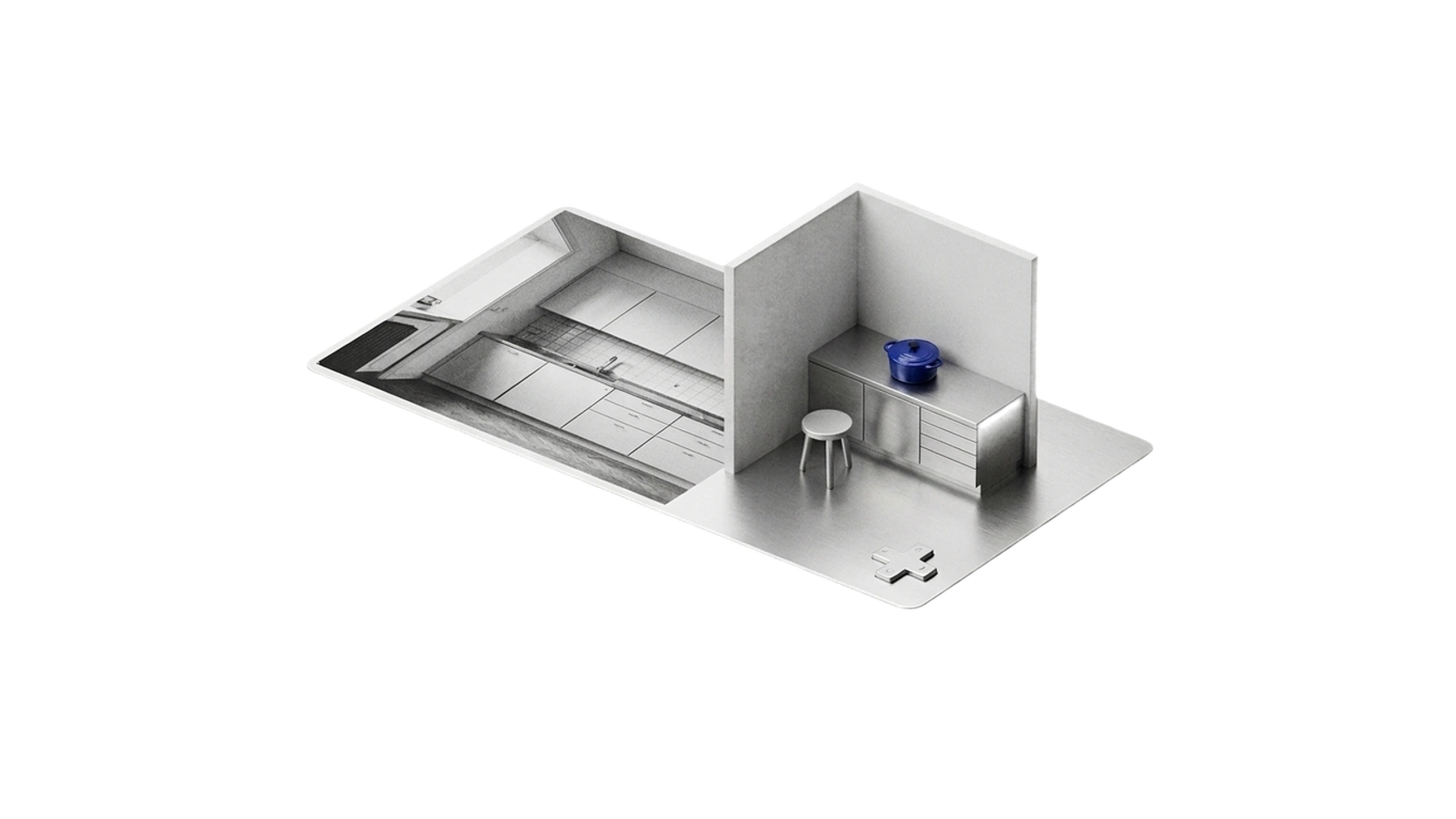
The paper plane is a good trick. The spoon is the more revealing one. In ByteDance’s world-model presentation, a small character explores a room; an instruction introduces a spoon beside a cup, and the demonstration continues around the changed environment. The appeal is immediate: the picture appears to become a place where a new decision can matter.
The footage circulating on X comes from Tim, also known as Pan Tianhong of MediaStorm, speaking at the 2026 美好奇妙夜 event on 11 October. This is a public demonstration, not a verified release of a tool we can all use. For filmmakers, its most interesting proposal is specific: explore a scene, choose a route through it, then revise the scene without starting the whole conversation again.
The scene is supposed to answer back
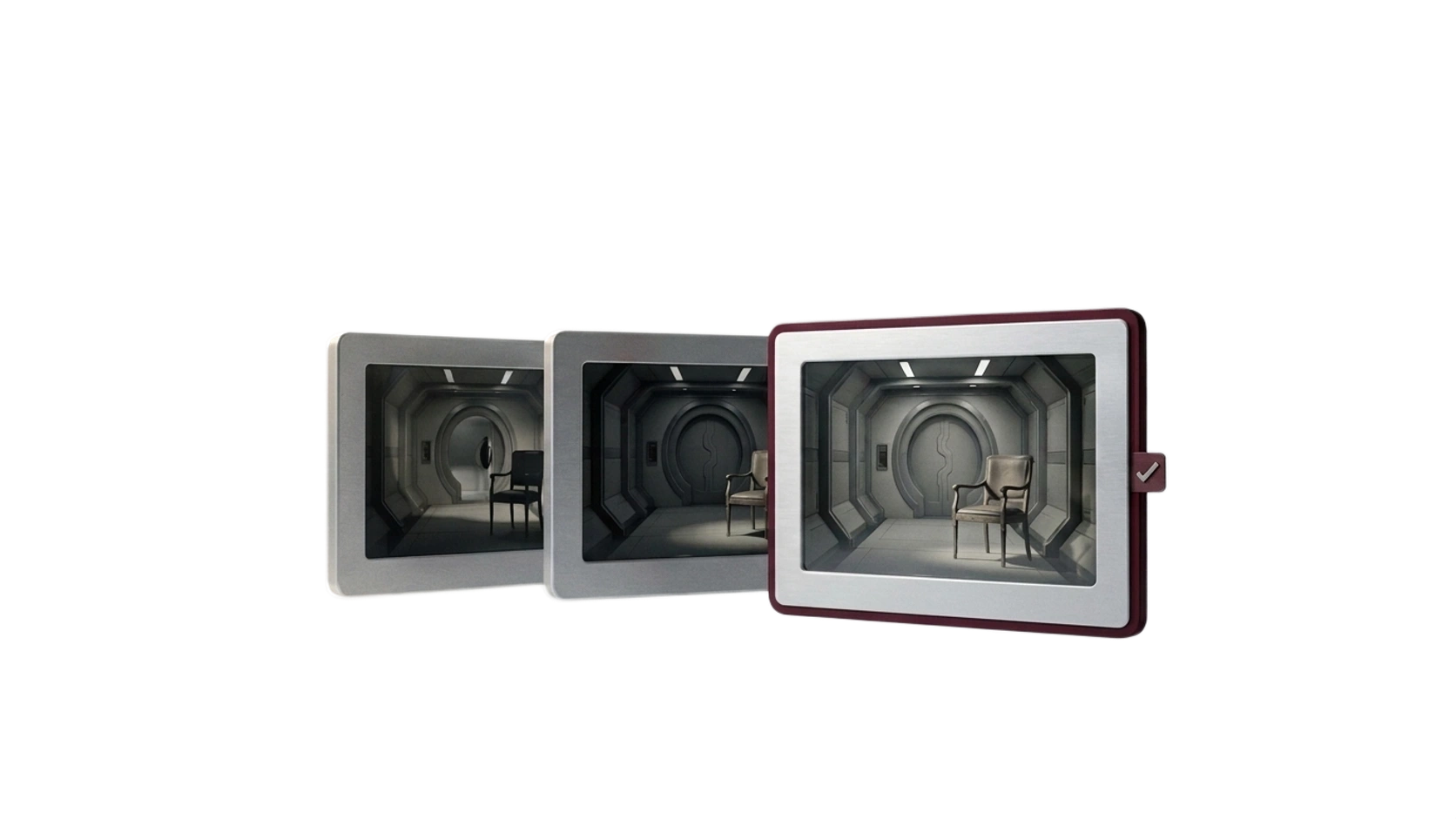
The presentation combines keyboard-and-mouse navigation, a paper-plane flight, an added object and a doorway connecting different environments. These are shown as parts of an interactive world. Their shared idea is that the next view depends on an action taken inside the scene, rather than only on the original description.
A world model, in this context, aims to predict how an environment changes as an agent acts. That puts continuity under pressure. Turn around and the room should still make sense. Add a spoon and the cup should keep its position. The recorded showcase illustrates the ambition; it does not give us a measured success rate, an unedited interaction log or a latency benchmark.
Sources: Beijing Satellite TV / Weibo [1] · Theoretically Media / X [4]
The subtitled stage demonstration
The creator’s original post and demonstration on X.
Embedded from the supplied X post. Broadcast footage and the film excerpt belong to their respective rights holders. The post’s capability descriptions and translated subtitles are not product documentation. The complete official speech is linked in the credit.
The filmmaking question is where the camera can go
The film example uses Stephen Chow’s King of Comedy. The presentation places a camera-trajectory view beside original footage, framing the world model as a way to explore alternative views. A familiar film scene makes the proposal concrete: a camera move is something you might be able to choose within a generated environment.
For a director, the useful possibility is deciding when information enters the frame. A sideways move might reveal someone listening behind a doorway. A slower approach might withhold a face for another second. If the environment survives those choices, camera direction becomes a spatial decision you can compare, instead of a sentence whose interpretation you must wait to see.
That is a previsualization hypothesis. The demo does not establish repeatable actor performance, lens calibration, production-resolution output or camera data that can be transferred into a film pipeline. Those capabilities would decide whether this becomes a useful scouting tool, a source of final shots or simply a compelling way to sketch.
Sources: Theoretically Media / X [4] · Beijing Satellite TV / Weibo [1]
An explorable image still needs an output format
The phrase “text-to-3D worlds” travels easily through social posts. It can also hide a technical gap. Images that respond to navigation do not, by themselves, prove the existence of an editable mesh, stable object coordinates, collision geometry or an exportable scene. The demonstration’s public sources do not specify those deliverables.
This matters when discussing the AAA-game predictions attached to the clip. A game also needs reliable rules, saved state, interaction systems, performance targets and a way to ship. The Red Dragon’s post captures the excitement, but its prediction is commentary. The clip supports a discussion about interactive generation; it does not demonstrate an individual delivering a complete AAA game.
Sources: The Red Dragon / X [5] · Ai Broadcast TV / X [6] · ByteDance Seed [3]
How the demonstration became a game-development prediction
The creator’s original post and demonstration on X.
A reaction to the demonstration, embedded for context. The AAA comparison is the account’s prediction, not a measured capability or a ByteDance specification.
What can you actually use today?
As checked on 13 October, we found no official product name, public access page, price or export specification for the demonstrated model in the broadcaster’s material and ByteDance’s Seed catalogue. The catalogue lists Seedance 2.5 separately. Calling this showcase “Seedance 3.0” would add a name that those sources do not establish.
There is also no same-condition performance comparison in this material. Frame-rate or latency numbers from earlier reporting cannot be assigned to this stage sequence. For now, the usable object is the demonstration itself: something to inspect, discuss and turn into a precise future test.
Sources: ByteDance Seed [3] · Beijing Satellite TV / Weibo [1] · Btime / Beijing Radio and Television [2]
The revealing test is the second route
Our proposed test is deliberately small: a room, a cup, a spoon and two camera routes. First, approach the table and return to the starting point. Then explore from the other side with the scene unchanged. Finally, move only the spoon and repeat the first route. Compare the room layout, the cup’s shape, the direction of light and the moment each object becomes visible. Measure the wait for each intervention as well as the quality of the result.
We have not run that test. It is the practical question the spectacle suggests. The paper plane makes a generated world easy to imagine. The second route would tell a filmmaker whether that world can hold onto a decision long enough to direct it.
SOURCES & METHOD
The record behind the article
Checked 13 October 2026 against the official broadcaster’s posts, event announcement, ByteDance Seed catalogue and all three supplied X posts. Selected moments of the subtitled stage video were visually inspected; this was not a complete technical test or direct use of the model. Production scenarios are editorial analysis. X embeds remain hosted by X; no broadcast or film footage has been downloaded for republication.
- Tim / MediaStorm — 让想象此刻登场, complete official speech ↗Beijing Satellite TV / Weibo · 11 October 2026
- 2026 美好奇妙夜 — official event announcement and broadcast date ↗Btime / Beijing Radio and Television · October 2026
- ByteDance Seed — current model catalogue ↗ByteDance Seed
- Subtitled excerpt and creator commentary ↗Theoretically Media / X · 12 October 2026
- Reaction: the prospect of individual AAA-scale game creation ↗The Red Dragon / X
- Commentary on interactive worlds and filmmaking ↗Ai Broadcast TV / X · 12 October 2026