Tools / Analysis
One prompt, ten minutes of film? VideoGen wants to take responsibility for the cut
Model 1 promises a whole production from a brief. The interesting question is what survives from one shot to the next—and what happens when the director changes their mind.



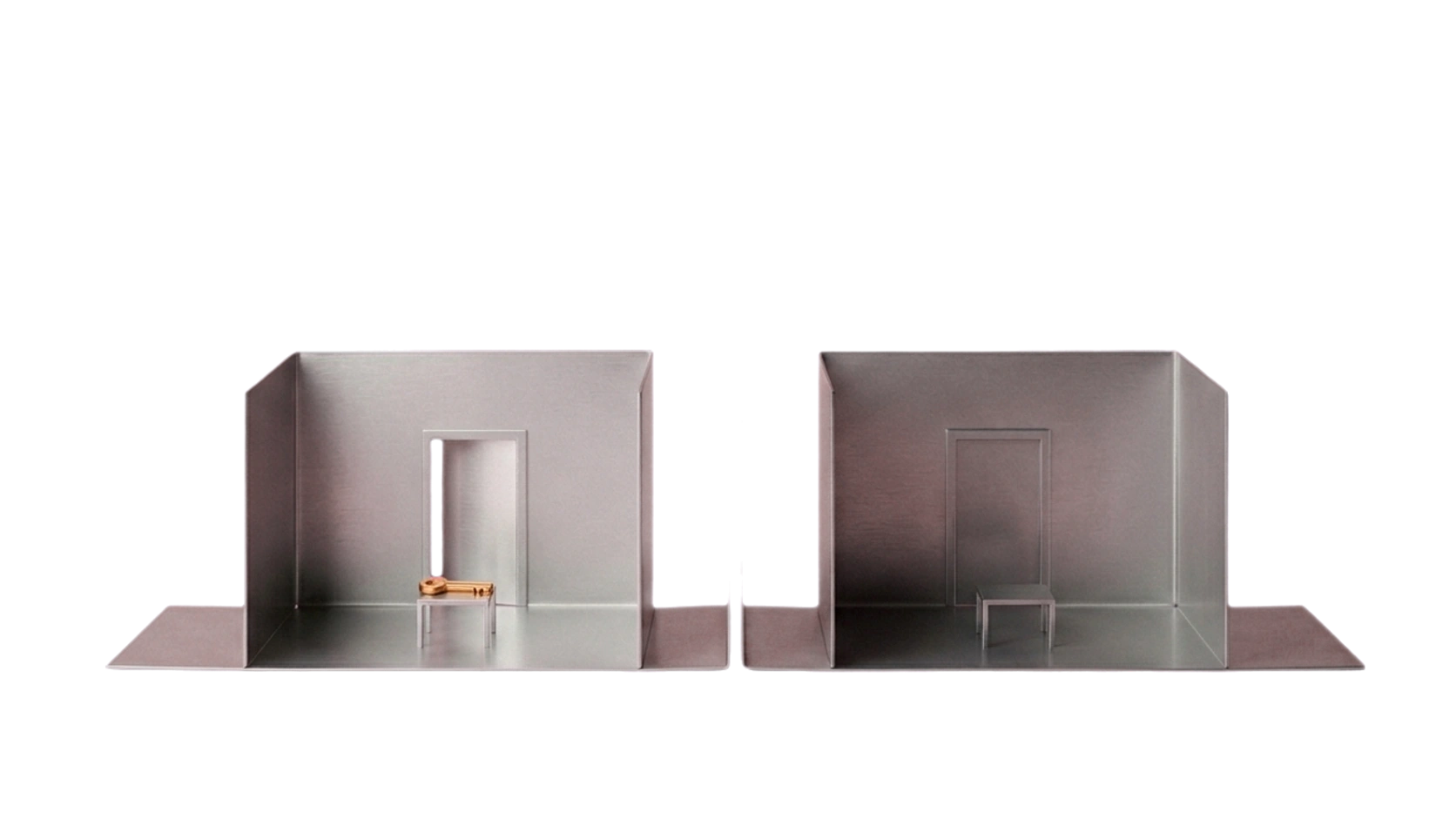

A woman leaves a key on a table. We cut to the hallway. A door closes. When she returns, the key is gone.
Nothing here requires a spectacular image. Everything depends on the relationship between images: where the key was, who could have taken it, what the woman knows, and when we learn something she does not. That small scene is a useful way into VideoGen’s much larger promise.
On 20 October, the company began a limited private-partner rollout of Model 1, advertising multi-shot videos of up to ten minutes from a single prompt. Its showcase includes five-minute animation and a shorter claymation-style film, presented as outputs without subsequent editing. These are company demonstrations, not a measure of how often an arbitrary brief succeeds.
The production between the generations
According to VideoGen’s announcement, users can supply up to 16 reference images. Longer videos are assembled from independently generated shots, with shared descriptions and references intended to preserve recurring subjects. The pipeline checks, retries selected renders within a budget, and joins the clips.
This changes how the product should be understood. A director does not simply ask a camera to keep recording for longer. A system makes a sequence of decisions: what deserves a shot, what can happen outside the frame, where dialogue ends, and which image should follow it.
For a filmmaker, the promise is appealing precisely because those decisions take work. A good shot list turns an intention into something a crew can execute. An edit then discovers which of those intentions the material actually supports. Automating parts of that exchange could make a rough idea tangible much earlier.
But a plausible shot list can still produce an inert scene. Showing a person, a doorway and a missing key establishes the ingredients. It does not necessarily establish suspense. The difference may be one withheld close-up or half a second spent with a face after the dialogue stops.
The creative question is how much of that judgment the system makes successfully—and how much of it the user can inspect and change.
Sources: VideoGen [1] · VideoGen [2] · VideoGen via GlobeNewswire [3]
VideoGen Model 1 — official launch film
Official video linked from the launch page. Selected company material, not an independent reliability test. Playback starts only when you choose it.
What the technical paper actually tests
The white paper identifies Model 1 as a post-trained MiniMax H3 model. Its pilot compares three prompt treatments across 30 prompts: 90 clips, each about five seconds long, rated by two AI judges. One judge found an overall advantage for creative expansion over formatting alone; the other’s uncertainty interval included zero. That is a prompt-preparation experiment, not a ten-minute storytelling benchmark.
This is a useful distinction, not a technicality. A study of individual clips can ask whether instructions produce a more coherent audiovisual result. A film also asks whether an earlier action changes the meaning of a later one. The missing key matters because we remember seeing it; a viewer who missed that moment watches an entirely different scene.
Nor do automated ratings tell us whether an audience feels curiosity, embarrassment or relief. Those responses depend partly on the expectations the film has created. A perfectly intelligible sequence can be predictable. An intentionally uncomfortable pause can look inefficient on a checklist while doing essential dramatic work.
The paper gives the reader something concrete to examine. It also sets a boundary around the conclusions. We should keep that boundary when discussing the launch.
Sources: VideoGen [2]
Continuity has more than one meaning
The simplest form is visual: the coat stays the same colour and the room retains its door. Spatial continuity goes further. If a character looks to the left, the following image should give that look a comprehensible destination—or break the relationship deliberately.
Then there is dramatic continuity. A character who has discovered a betrayal should not enter the next shot as though the conversation never happened. The face may remain recognisable while the scene loses its memory.
Sound adds another layer. Room tone can make two images feel like the same place. A breath can carry a thought across a cut. A musical swell can announce an emotion before the performer has earned it. Picture and sound may each be attractive while their combination tells us the wrong thing.
These distinctions matter when evaluating a whole-production tool. A longer output gives us more opportunities to notice contradictions. It also gives the system more opportunities to build meaning. Duration amplifies both.
The test we would run first
We have not tested Model 1. Our first proposed exercise would be smaller than its advertised maximum: a minute-long exchange between two people, one room and a sealed envelope.
One character knows what is inside. The other pretends not to care. The brief would specify three necessary moments: an offer, a refusal and a change of mind. It would leave room for performance, but make the information available to each character explicit.
After the first version, we would request one change: hold the refusal longer, without altering the room, the envelope, the spoken words or the final decision.
That revision would reveal something a polished first result cannot. Can the system preserve the accepted parts while changing one dramatic beat? Does extending the pause disturb the next line? Does a different reaction shot accidentally suggest that the other character already knows the secret?
The score would concern usable control: which instructions survived, which changes stayed local, and how much repair remained. We would also show the sequence to people who had not read the prompt and ask what they believed happened. A film must communicate its logic through the material on screen.
A cheaper render is only the beginning
VideoGen projects costs more than 50% below comparable models, while saying final pricing and third-party validation remain unfinished. That projection should not be treated as a published price comparison.
For a working production, the useful unit is the accepted sequence. Its cost includes generations, selection, revisions, sound work and the time spent explaining what needs to remain unchanged. A cheap version that has to be rebuilt repeatedly can consume a generous budget. An imperfect first pass that responds reliably to notes can be valuable.
That makes revision behaviour central to the economics. Imagine a pitch film whose client approves everything except a gesture near the end. The practical question is whether fixing that gesture preserves the approval already earned elsewhere.
Early uses could therefore be modest and productive: testing scene structure, comparing different orders of revelation, or making a pitch easier to discuss. These are proposed uses, not workflows we have verified in Model 1. Their value would come from helping people make decisions, even when the generated material never reaches the final film.
Sources: VideoGen via GlobeNewswire [3]
What would make this a meaningful release?
Model 1 deserves attention because it puts the connective work of production at the centre of the product. Its public evidence does not yet establish how reliably that work holds over ten minutes, or through a demanding round of notes.
The next convincing demonstration would show both a finished sequence and its revision: what the filmmaker asked to change, what the system changed, and what it managed to leave alone. That would tell us more about professional usefulness than runtime by itself.
Return to the key on the table. The image is simple. The filmmaking begins when someone notices that it is missing—and the next shot lets us understand why that matters.
SOURCES & METHOD
The record behind the article
Primary launch materials and the linked technical paper were reviewed on 21 October 2026. This is a document-based analysis, not a hands-on review or a shot-by-shot assessment of the showcase films. Access remains limited; ten minutes is the company’s stated maximum.
- Model 1 — official launch and showcase ↗VideoGen · 20 October 2026
- Model 1 technical whitepaper ↗VideoGen
- VideoGen unveils Model 1 — company announcement ↗VideoGen via GlobeNewswire · 20 October 2026