The director’s view
Tim Sweeney says the games we couldn’t afford to make are coming.
A 5.2-million-view prediction, Epic’s AI-assisted Launcher Preview and experimental tools inside Unreal. The interesting question is which previously impossible games can now be finished—and what still stands between a prototype and a release.




The most interesting game in Tim Sweeney’s prediction is one you have never played. Nobody made it. Its audience was too small, its systems too expensive, or its developer ran out of time before the idea became something another person could actually play.
On 18 October, Epic’s founder predicted a new wave of games previously blocked by economics or resources. His post showed 5.2 million views when we checked it on 19 October. The attraction is easy to understand: an industry built around selecting feasible ideas might be able to say yes to more of them.
That possibility matters more than another impressive coding demo. It also has a harder test. Can a team finish a distinctive, dependable game within its means—and still want to maintain it after launch?
The viral claim is bigger than the original post
Sweeney’s phrase is “a new golden age of gaming.” He is forecasting a change in what can be made. The post gives no percentage reduction in budgets, no comparison between two production teams and no delivery date. It does not itself name AI.
The AI connection is nevertheless explicit in his earlier statement of 12 October. Sweeney described Epic reorganising development around AI acceleration, with the stated aim of helping its people build more and better work and extending the benefits to Unreal teams. That is management’s declared intention; the resulting production economics still need evidence.
“The cost of making a game is collapsing” is the more forceful interpretation circulating around the post, including in the Min Choi repost supplied for this story. It is an attractive headline, but it answers a question the original statement leaves open. A forecast about possibility is not yet an account of what a finished game cost.
Sources: Tim Sweeney / X [1] · Tim Sweeney / X [2]
Tim Sweeney’s original prediction
The creator’s original post from X.
Original text post, embedded from X. The platform displayed 5.2M views at our 19 October check; this is a changing counter, not a count of unique readers or a measure of agreement.
There are tools behind the optimism
Unreal Engine 5.8, released on 23 June, includes an Experimental Model Context Protocol plugin. Epic says it exposes systems such as Blueprints, assets, levels, materials and meshes to language models. This is a connection between an assistant and an editable project, with developers able to extend the exposed functionality.
The release label matters. Epic explicitly says Experimental and Beta features should not be treated as production-ready. Nor is this an October-weekend release: it is existing technical context for Sweeney’s new prediction.
The practical distinction is editability. A generated picture can suggest a level. An assistant connected to the editor can help change the level’s actual parts. The second route creates an opportunity to inspect the result, revise a collision shape, replace a material or change a rule. It also creates a requirement to check those changes in the running game.
Sources: Epic Games / Unreal Engine [3]
The useful work often happens away from the hero demo
In Epic’s June roadmap, Marcus Wassmer described successful internal uses including custom tools, codebase indexing, crash and build-failure analysis, and test generation. He noted that most of those examples were not generating the engine’s mainline code. That is a more specific picture of adoption than a model apparently making an entire game.
A small tool can have an outsized effect when a team uses it every day. Consider an artist repeatedly fixing the same naming problem across hundreds of assets, or a programmer retracing a familiar build failure. Automating a well-defined chore can preserve attention for a decision that needs judgment. This is production reasoning, not a measured saving reported by Epic.
For filmmakers working in Unreal, the same question applies to a scene: how long does it take to reach a version in which the staging, lighting and movement can actually be judged? A quickly assembled environment is valuable when it gets a useful decision made sooner. More variations alone do not establish that value.
Sources: Marcus Wassmer / Epic Games [4]
The road to Unreal Engine 6
Official presentation linked from Epic’s State of Unreal page. June 2026 context, not a recording of the 18 October post. The article uses Epic’s written roadmap for its technical claims.
Epic has a fresh example. It is a launcher.
On 14 October, Epic released a new Launcher Preview for Windows, macOS and Linux, describing its development as vibe coding. The company claims a faster, more responsive experience while acknowledging a limited initial feature set and possible preview issues. It publishes no controlled development-time comparison or audited production budget on that announcement page.
This gives the debate something tangible to examine. A launcher still has users, compatibility requirements and failures to fix. Yet success in this application would not automatically settle the economics of an action game’s animation, online systems, encounter design and platform optimisation. The transfer has to be demonstrated at the level of the work.
Sources: Epic Games Store Team [5]
Four times faster at one task is not a game made four times cheaper
Take a deliberately simple illustration, not an industry benchmark. A task bundle takes 100 hours. Forty hours can be accelerated fourfold; the other 60 remain unchanged. The new total is 70 hours before any extra review or rework: a 30% reduction, not 75%. The result depends on how much of the whole job is actually accelerated.
That does not make the gain trivial. A project close to its feasibility threshold might become possible with a modest saving. But if the team spends the recovered time making a bigger game, its final budget may stay the same. The benefit could be richer work, more experiments or a better chance of finishing. Each is worth measuring separately.
METR’s May survey of 349 technical workers makes a related distinction. Median self-reported speed gains were 3×; estimated gains in the value of work were 1.4–2×. These are different questions, answered by a non-representative sample, with reasons to suspect overestimation. They are not game-development budget measurements. Their usefulness here is methodological: speed and useful output need separate accounting.
Sources: METR / Joel Becker [6]
The expensive part may move
A generated interaction has to work when the player behaves unexpectedly. A level has to remain readable after the lighting changes. A save file has to survive the next update. These requirements turn a promising prototype into a product that other people can trust. Faster generation can move the bottleneck into integration, evaluation or maintenance.
The question for a small studio is therefore where saved effort appears—and whether it stays saved. The following is an editorial framework for checking a workflow, not a scorecard of tested models.
| Production step | Potential gain | What to verify |
|---|---|---|
| Tools and repetitive setup | Less manual work | Repeatability, readable changes, recovery |
| Gameplay prototype | Earlier playable experiment | Behaviour under unexpected input |
| World and scene assembly | More design iterations | Consistency, collision, frame time |
| Release and maintenance | Potentially faster fixes | Regressions, platform behaviour, ownership of changes |
A better studio test: finish one small game loop
Before committing a production to that forecast, I would choose one bounded vertical slice: enter a room, solve a small interaction, receive a response and return to a saved state. Give it a target device, a performance budget and an explicit definition of done. Include a lighting pass, sound and one deliberate design revision so the test has to survive a change of mind.
Log time to first playable and time to accepted build separately. Count human review, failed attempts, subscriptions or compute, debugging and the work required to make the second version. Have another person play it without coaching. For a fair comparison, use matched tasks and acknowledge the learning advantage of doing anything twice.
This is a proposed test, not one conducted for this article. It would reveal something a beautiful demo cannot: whether the workflow helps a particular team keep a promise to a player.
The best outcome is a game that otherwise would not exist
Sweeney’s most compelling idea is that a strange, personal or commercially narrow project could move from impossible to feasible. Its value would not depend on looking like a large studio’s blockbuster. It could come from a mechanic, a world or a point of view that only this team wanted to pursue.
The evidence supports taking that possibility seriously and testing it in real production. It does not yet support declaring that total game-making costs have collapsed. A golden age would be visible in the games that reach players, the people who can sustain making them and the creative risks that become affordable. Faster code is one input. Finished, interesting work is the result worth waiting for.
SOURCES & METHOD
The record behind the article
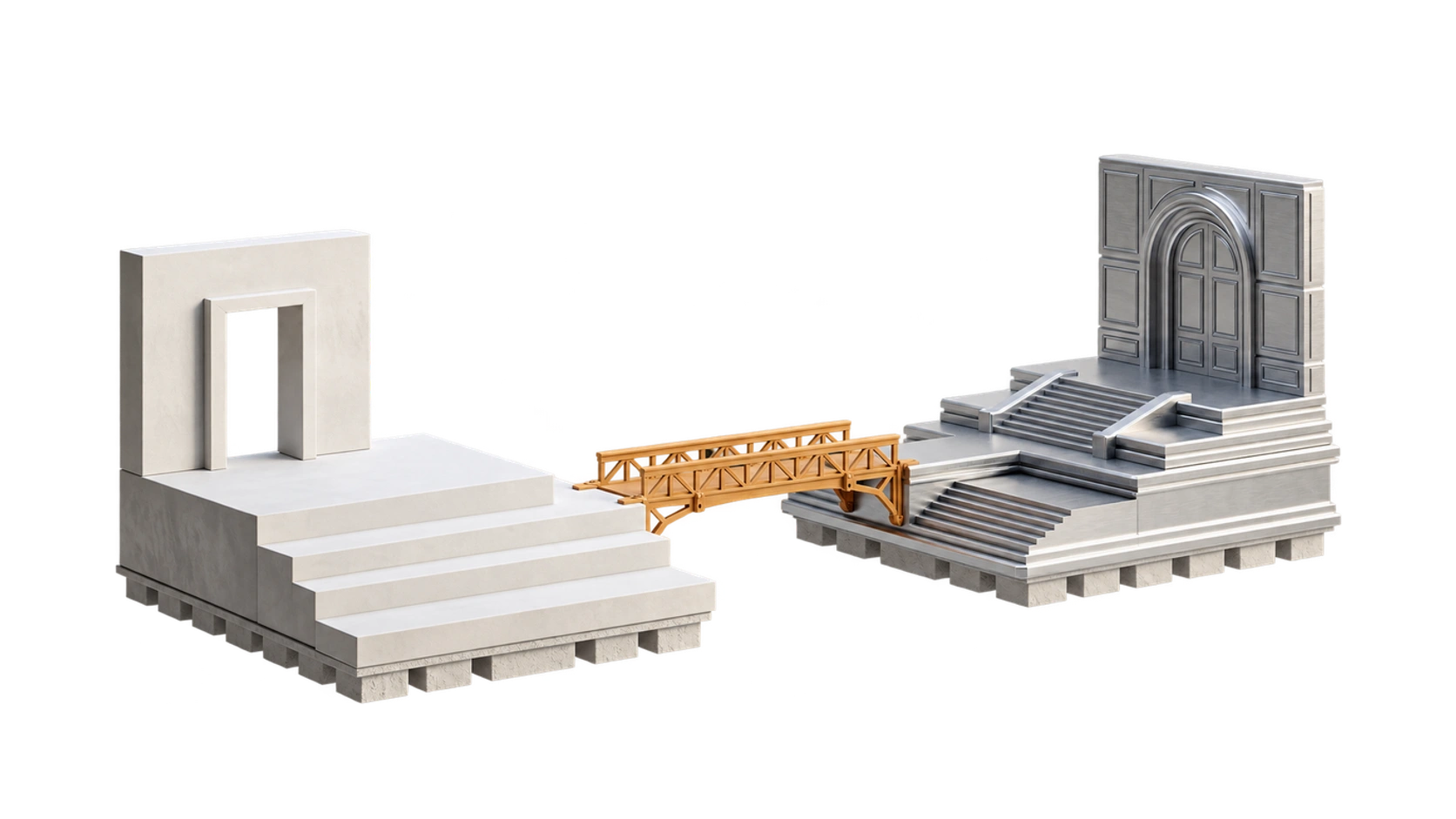
Source-led analysis checked 19 October 2026. Both Sweeney posts were read in the browser; the 5.2M figure is the displayed X counter at that check. Technical claims come from the linked primary publications. We did not benchmark the Launcher, the MCP plugin or a full game-production workflow. The arithmetic example is illustrative; the studio test and production framework are editorial proposals. Embedded material remains with its original publisher. The cover is an editorial metaphor, not an Epic product render.
- The games previously too expensive to make — original forecast ↗Tim Sweeney / X · 18 Oct 2026; checked 19 Oct
- Epic’s stated AI development pivot ↗Tim Sweeney / X · 12 Oct 2026
- Unreal Engine 5.8 is now available ↗Epic Games / Unreal Engine · 23 Jun 2026
- The road to Unreal Engine 6 ↗Marcus Wassmer / Epic Games · 22 Jun 2026
- The new Epic Games Launcher is finally here in Preview ↗Epic Games Store Team · 14 Oct 2026
- Measuring the Self-Reported Impact of Early-2026 AI on Technical Worker Productivity ↗METR / Joel Becker · 11 May 2026
- State of Unreal 2026 — official presentation links ↗Epic Games / Unreal Engine · June 2026