Tools / Analysis
Rumble-2-Flash lets an editor keep the hesitations in an interview
The half-billion-parameter model supports more than 40 languages. Separate settings govern fillers, repeated words and how numbers appear on the page.
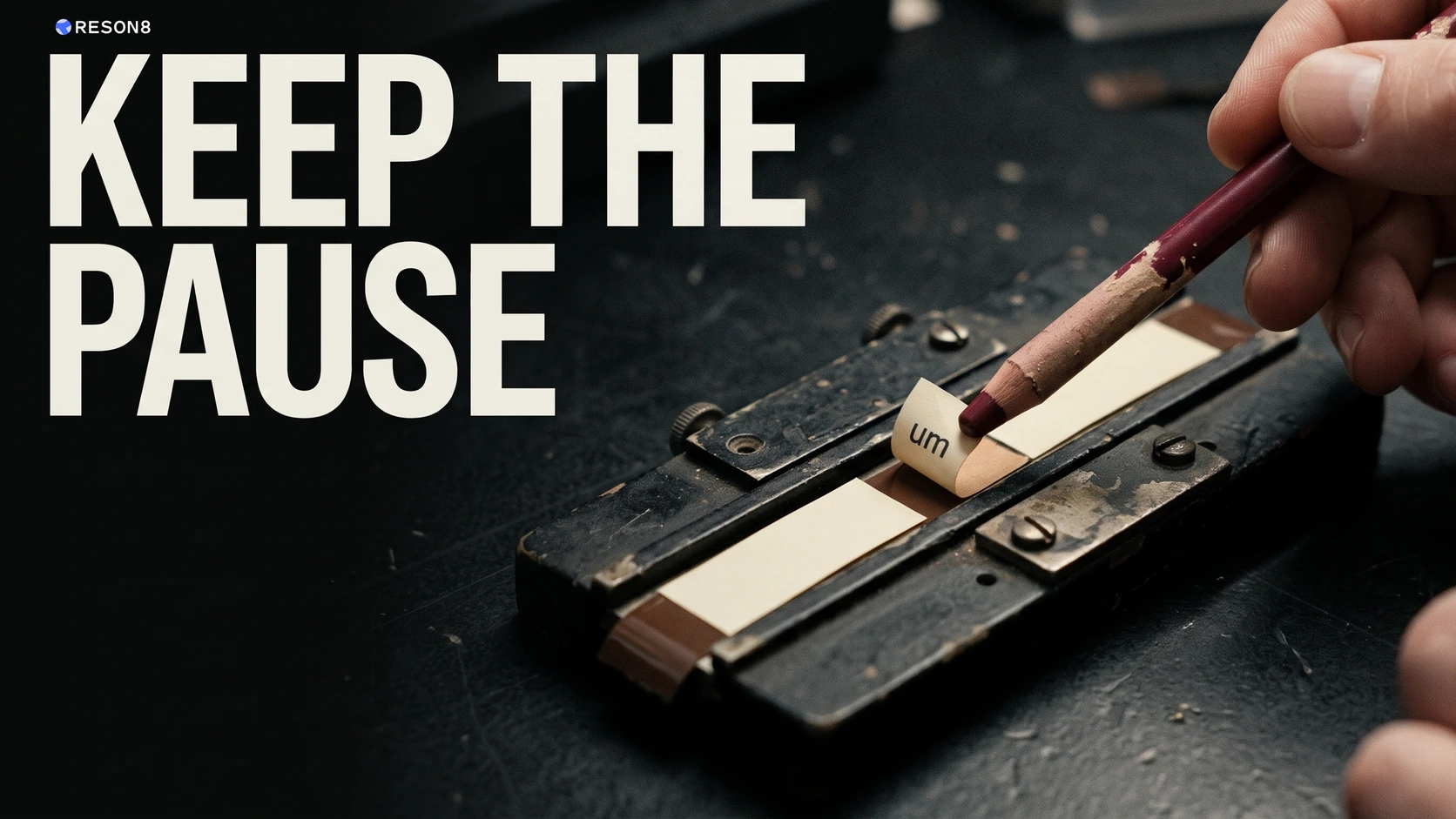
An interviewee can say “I, I think” and mean something slightly different from “I think.” A reporter looking for the exact cadence and a subtitler trying to fit a line on screen have good reasons to want different transcripts of the same recording. Reson8’s Rumble-2-Flash exposes that choice before the text is written. On November 18 the company released the weights of its 0.5-billion-parameter speech recognition model under Apache 2.0.
Two switches that sound like one
Fillers and repeated words have separate controls. By default the model drops fillers such as “um” and keeps word repetitions. Turning on the filler option and leaving repetitions enabled requests a more literal account. Turning both off requests a cleaner first pass for reading. A third option chooses digits or spelled-out numbers. None requires a second model.
Rumble-2-Flash supports more than 40 languages. Leave the language unspecified and the model identifies it, or supply the known language explicitly. The weights run with Hugging Face Transformers or through vLLM. For an archive of interviews, that makes the transcription policy a setting an editor can reproduce across recordings.
Sources: Reson8 [2] · Reson8 / Hugging Face [1]
A fast batch and a difficult conversation
Reson8 trained the smaller model by having it attempt a transcript and asking its larger Rumble-2 model to evaluate each step. The published results show why the choice of test matters. On the English leaderboard, the model card lists a 3.71% word error rate for the private scripted set and 13.14% for private conversational material. A tidy transcript can still be wrong about what someone said.
The team’s headline speed result uses full batches of audio. It describes how much recorded material a system can process in aggregate. An editor waiting for the first words from a single microphone is measuring something else. For a backlog of recorded interviews, the batch result is relevant. For a live caption, the more revealing measurement would be the delay from a spoken word to its appearance on screen.
Sources: Reson8 / Hugging Face [1] · Reson8 [2]
How the smaller model learns from its own transcript

In the training method published by Reson8, the smaller model proposes the transcript and the larger model supplies feedback at each position.
SOURCES & METHOD
The record behind the article
Checked 19 November 2026. Technical claims are grounded in developer documentation; videos are credited to their creators. Company claims and third-party reviews are attributed in the text; conclusions are editorial analysis. No original comparative testing of these releases was conducted for this article.
- Rumble-2-Flash — an open 0.5B speech model for 40+ languages Reson8 / Hugging Face
- Rumble-2-Flash model card and weights Reson8