Tools / Analysis
OpenAI’s unnamed model scores 0.875 on BenchCAD 2.0
A CAD model can look convincing and still put the parts in the wrong place. The benchmark makes that distinction measurable.

OpenAI’s November 3 engineering report puts an unnamed internal model at 0.875 on BenchCAD 2.0, against 0.594 for GPT-6 Astra at maximum reasoning. It does not identify the model or announce its release.
A shape is only part of the answer
BenchCAD’s held-out Core set contains 100 cases across six tasks. It checks geometry, assembly placement and circuit connections against reference answers. A score of 0.875 is not a claim that 87.5% of products are ready for manufacturing.
Version matters. BenchCAD warns that its v2.1 execution harness carries reasoning between rounds and permits a larger budget than v2.0; their scores are not directly comparable. OpenAI’s summary does not specify the harness version. The figures above therefore remain its reported comparison, not a merged cross-company leaderboard.
Sources: OpenAI [1] · BenchCAD Team [2]
The useful step: an editable part
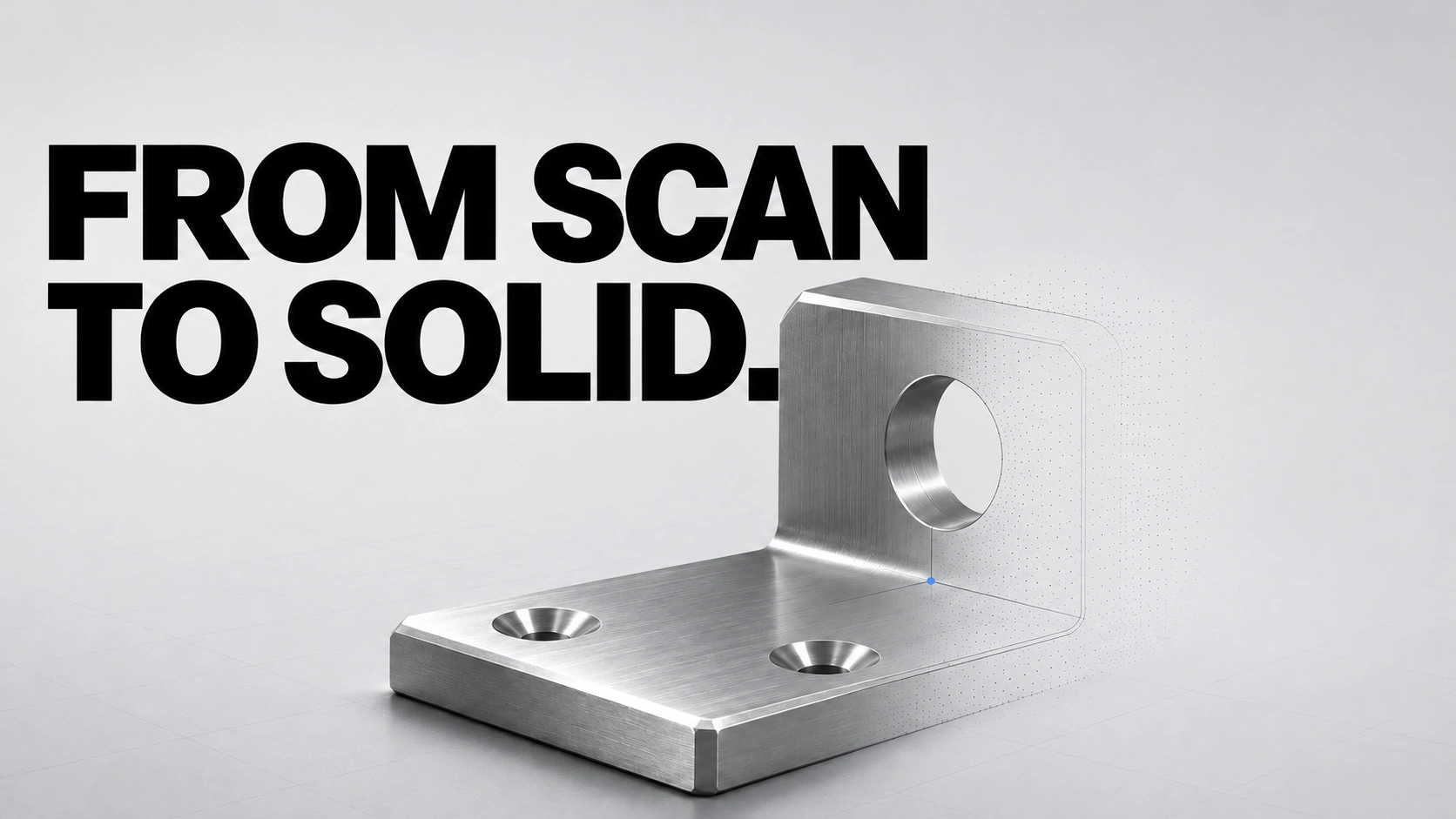
OpenAI describes work with Chip Ganassi Racing to turn scans into editable CAD and manufacturing drawings. Its separate Astra device experiment still needed manufacturing corrections. For a reader evaluating this progress, the next question is concrete: can the resulting part survive assembly and production checks?
Sources: OpenAI [1]
SOURCES & METHOD
The record behind the article
Company-reported result and benchmark documentation; no independent run.
- Accelerating engineering for the physical world OpenAI · 2026-11-03
- Introducing BenchCAD 2.0 BenchCAD Team · 2026-10-12